
How to Track Trip Fuel Costs on Every Road Trip
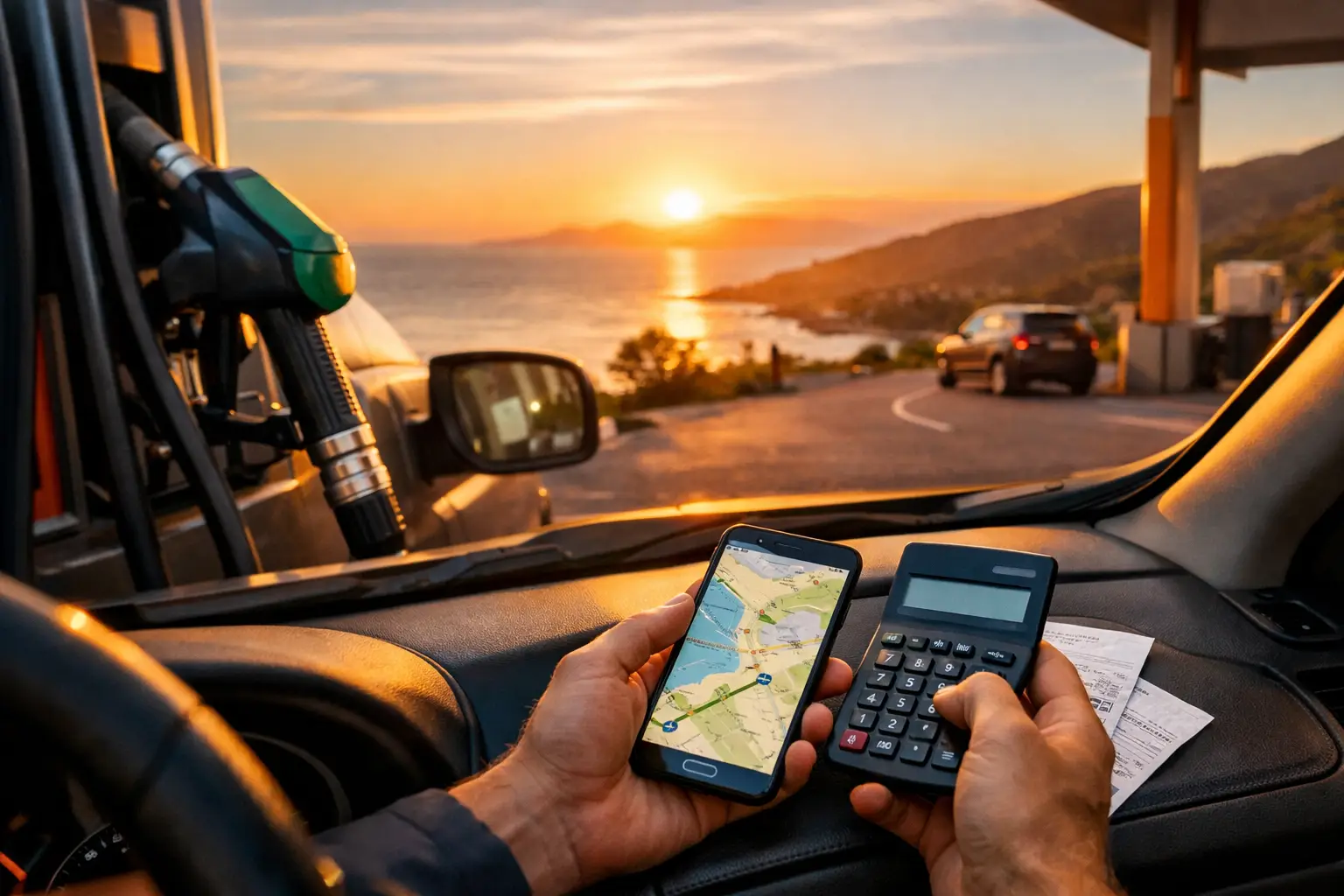
> Quick answer: To track trip fuel costs, record your odometer reading, litres purchased, price per litre and total paid at every fill-up. Then divide total fuel spend by trip kilometres for your cost per kilometre. For reliable fuel economy, fill to a consistent level and compare full tanks rather than guessing from the fuel gauge. > > A servo receipt stuffed in the console might tell you what one tank cost. It does not tell you what the whole trip is costing, whether your rig is using more fuel than usual, or how much cash to set aside before the next long stretch. That is the difference between simply buying fuel and knowing how to track trip fuel costs properly. > > For a weekend away, rough numbers may be enough. For a caravan lap, overland route, campervan holiday or multi-state family trip, fuel is usually one of the largest moving costs. Pump prices change, headwinds matter, towing changes consumption, and a detour for a better campsite can add hundreds of kilometres. A simple, repeatable fuel record gives you control before those variables become expensive surprises. > > ## Start with the four numbers that matter > > Every fuel entry should capture four details: the odometer or trip-meter reading, litres bought, price per litre, and total amount paid. Add the date and location as well. The location helps when you are comparing regional prices or working out whether it was worth filling up before a remote section of road. > > The basic trip fuel total is straightforward: > > Total fuel cost = every fuel purchase made for the trip > > To see what travel is costing on the road, use: > > Fuel cost per kilometre = total fuel spend ÷ kilometres travelled > > If you spend $480 on fuel and travel 2,400 km, your fuel cost is $0.20 per km. That number is useful because it turns an unpredictable receipt pile into a planning figure. A 600 km detour is no longer just “a bit further” - at 20 cents per kilometre, it is roughly $120 in fuel alone. > > Fuel economy is a separate but related measure: > > Litres per 100 km = litres used ÷ kilometres travelled × 100 > > Keep fuel cost per kilometre and litres per 100 km side by side. The first reflects what you are paying. The second shows how your vehicle is performing. Prices can rise even when the vehicle is running efficiently, while a worsening litres-per-100-km figure may point to heavier loads, tyre pressure, towing conditions or a maintenance issue. > > ## How to track trip fuel costs accurately > > The cleanest method is the full-to-full approach. At the start of the trip, fill the tank to your usual stopping point, reset your trip meter if you use one, and record the odometer. At the next fill, fill to the same point again and record the new figures. The litres purchased are then a close measure of the fuel used over that distance. > > Consistency matters more than chasing a perfectly identical click from every bowser. Use the same approach each time, such as stopping at the first automatic click. If you top up manually after that, make a note. Different pumps, vehicle angles and tank shapes can slightly affect the result, but a consistent process smooths out most of the noise over several fills. > > Partial fills are still worth recording, especially when prices jump or you are heading into remote country. Just do not use a partial fill by itself to judge fuel economy. Your tank may already contain fuel from an earlier stop. For performance calculations, wait until the next full fill-up and measure the distance across the complete fuel cycle. > > There are two valid ways to count fuel on a trip that begins or ends with a partly full tank. The simpler method is to count every dollar paid during the trip. It is ideal for cash-flow budgeting because it shows what left your account. The more precise method is to start and finish with a full tank, which aligns the fuel purchased with the fuel actually consumed. Pick the method that matches the question you are trying to answer. > > ### Separate vehicle use from travel spend > > If the vehicle is also used for school runs, work or errands, do not let those kilometres muddy your trip data. Record the odometer at departure and arrival, then only assign fill-ups and distance within that window to the trip. > > For travellers towing a caravan or boat, add a note to each fill-up. “Towing”, “strong headwind”, “sand driving” or “mountain roads” gives the numbers context later. A 3 L/100 km increase may be completely normal for a loaded 4WD climbing ranges, but it is useful to know it happened. > > > Want to track your own trip costs without spreadsheets? Create a free Trip Tracka account and start tracking fuel, food, accommodation, maintenance, budgets and trip expenses in one place. Start Tracking Free. > > ## Build a fuel budget before you leave > > A fuel budget starts with a realistic distance, not the shortest route shown on a map. Add driving to campsites, scenic loops, town runs, backtracking, border crossings and the occasional wrong turn. For longer trips, a contingency of 10 to 15 per cent is sensible. Remote travel, unsealed roads, towing and flexible plans may justify more. > > Next, use your own recent consumption figure wherever possible. If your loaded campervan averages 12 L/100 km, use that rather than a manufacturer claim made under test conditions. If you are towing for this trip and your normal driving figure is unloaded, use a towing average or add a buffer. > > The planning formula is: > > Estimated fuel cost = planned kilometres ÷ 100 × expected L/100 km × estimated price per litre > > For example, 3,000 km at 14 L/100 km requires about 420 litres. At $2.10 per litre, that is $882. Add a 15 per cent route and price allowance and your working fuel budget becomes about $1,014. > > Price estimates deserve some caution. Metro prices can move quickly, while outback and tourist-area fuel may be consistently higher. Do not build a long remote route around the cheapest price you saw near home. Use a conservative average, then update your budget as actual fill-ups arrive. > > ## Make the record useful while you travel > > A notes app or paper log can work for a short trip, but the friction builds fast once you have bookings, food, repairs and shared costs to reconcile. The best system lets you attach fuel entries to the trip, see the running total against budget, and view cost per kilometre without moving figures between spreadsheets. > > Record a fill-up as soon as you pay, before the receipt vanishes under coffee cups and snack wrappers. If more than one person is travelling, agree on who logs it or use a shared trip record. One source of truth prevents the common problem of double-counted fuel, missing receipts and arguments about what is left in the budget. > > It also helps to review the figures every few days rather than waiting until home. If consumption is climbing, check tyre pressures, load distribution, roof racks, towing setup and servicing requirements. If fuel is consuming the accommodation budget, you can change the route, stay longer in one place or reduce long day drives while there is still time to adjust. > > ## Use fuel data to make better road decisions > > The real value is not the final total. It is the decisions the data supports. You can compare whether a longer but smoother highway route costs less than a shorter hilly one, see the true expense of towing, and set a realistic daily travel budget for the next leg. > > Over time, your records become more useful than generic estimates. You will know what your vehicle costs loaded for a two-week holiday, on corrugated roads, or crossing the country with a caravan behind it. You will also have a baseline that makes unusual fuel use easier to spot before it turns into a bigger mechanical bill. > > > Ready to replace scattered receipts and rough guesses? Use one trip dashboard to track fuel, expenses, budgets, routes and vehicle records as you travel. Start Tracking Free. > > A good fuel log does not take the spontaneity out of travel. It gives you the confidence to take the scenic road because you know exactly what it costs. > > By Craig Watts, founder of Trip Tracka > Built by travellers, for travellers - Trip Tracka helps you plan better trips, track costs, organise gear, save stops and keep your travel records in one place. > > Built while travelling full-time to help travellers plan trips, track expenses, manage budgets, record fuel, store gear details and keep travel records without spreadsheets.