
How to Budget for a Road Trip: Travel Budget Guide
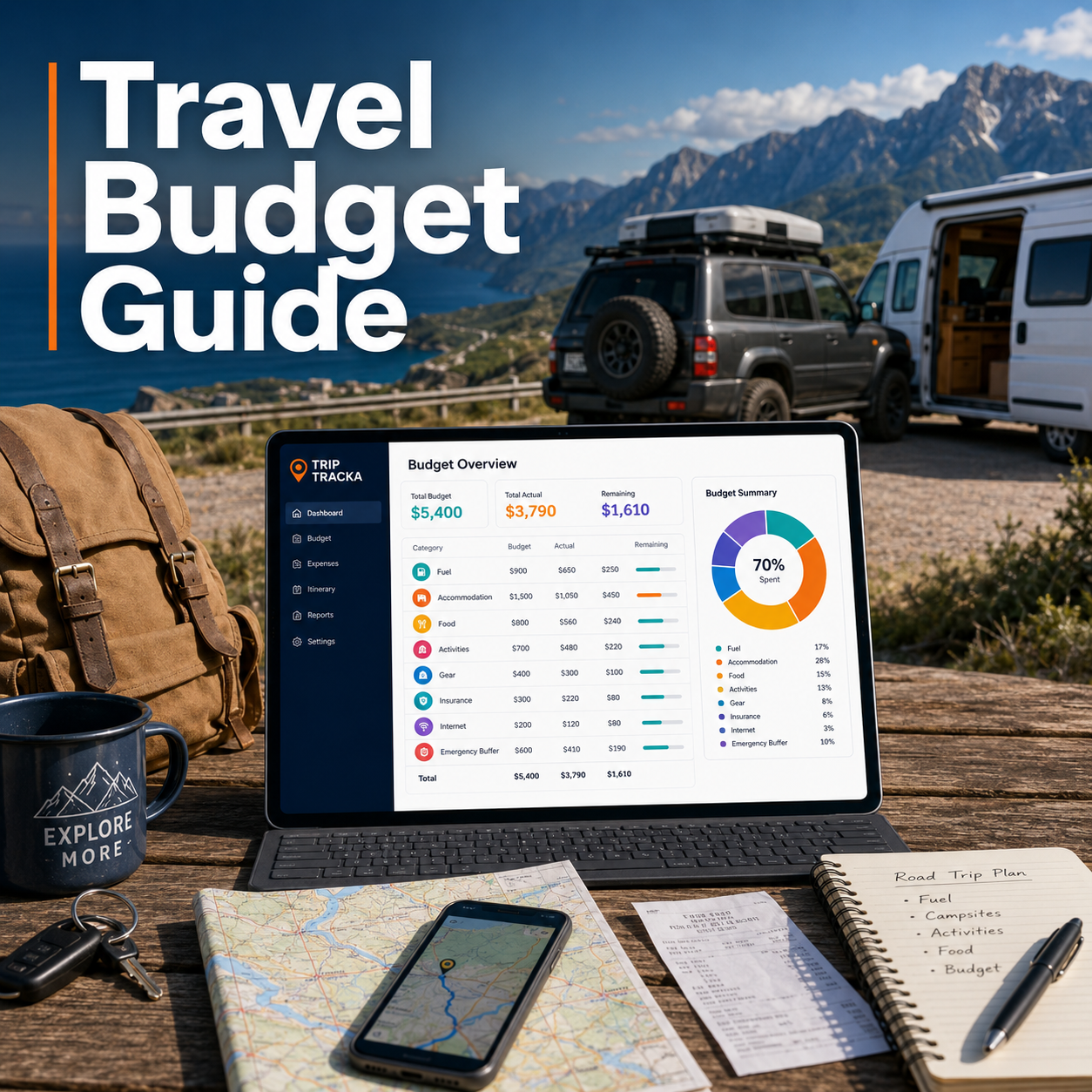
How to Budget for a Road Trip Without Guessing Your Costs
Most people start planning a trip by asking one question:
How much will this actually cost?
The problem is, most travellers guess.
They guess fuel costs.
They guess accommodation.
They guess food spending.
They forget tolls, campsites, parking, ferry costs, laundry, internet, attractions, gear, repairs, snacks and all the small purchases that quietly add up.
That is why a proper travel budget guide matters.
Whether you are planning a weekend road trip, a family holiday, a campervan journey, a camping trip, a caravan adventure, a backpacking trip, a lap around Australia, a USA road trip, a Europe van trip or a long-term overseas adventure, the same rule applies:
If you track your trip costs properly, you travel with less stress and make better decisions on the road.
A tool like Trip Tracka helps travellers plan routes, build travel budgets, track fuel usage, record expenses and organise trip details in one place.
This guide will show you how to budget for a road trip, what travel budget categories to include, how to use a simple trip cost calculator method and why a backpacking budget tracker or road trip expense tracker can save you from blowing your budget halfway through your trip.
Why Most Travel Budgets Fail
A travel budget usually fails for one of three reasons.
The first problem is that it is too simple. Many people only budget for fuel, accommodation and food.
The second problem is that it is not updated while travelling. A spreadsheet made before the trip can be useful, but it becomes outdated quickly if you do not track real spending.
The third problem is that it ignores daily habits. Coffee, snacks, takeaway, paid parking, laundry, extra fuel, attractions and replacement gear can easily become hundreds or thousands over a longer trip.
A good travel budget is not just a number.
It is a live plan.
That is why using a Trip Budget Planner, Travel Expense Tracker and Travel Planner together can make a big difference. Instead of guessing, you can plan your costs before you leave and compare them with what you actually spend while travelling.
Best Travel Budget Categories to Include
When creating your travel budget, break your spending into categories. This makes it easier to see where your money is going and where you can save.
The best travel budget categories include:
Fuel and transport, accommodation, groceries, eating out, activities, gear, insurance, internet, phone costs, laundry, daily living, emergency money and trip extras.
These categories work for road trips, backpacking, campervan travel, camping trips, caravanning, RV travel, family holidays, digital nomad travel and long-term travel.
If you are planning a driving holiday, start with the Road Trip Planner so your route, stops, fuel estimates and budget are connected from the beginning.
1. Fuel or Transport
For road trips, fuel is often one of the biggest costs.
Include petrol, diesel, gas, EV charging, tolls, ferries, parking, public transport, flights, rideshare, taxis, vehicle hire, scooter hire, bike hire and any extra transport costs.
For road trips, calculate fuel before you leave, then track your real fuel economy during the trip.
Simple fuel cost formula for kilometres:
Total distance ÷ 100 × fuel usage per 100km × fuel price = estimated fuel cost
Example:
3,000km ÷ 100 × 12L/100km × $2.10 = $756
Simple fuel cost formula for miles:
Total miles ÷ MPG × price per gallon = estimated fuel cost
A Fuel Tracker is useful because your real fuel cost can change depending on towing, hills, wind, tyre pressure, traffic, road conditions and how much weight you are carrying.
Once you know your real fuel cost per kilometre or fuel cost per mile, it becomes much easier to plan future trips.
2. Accommodation
Accommodation can change your whole travel budget.
Include hotels, motels, hostels, campgrounds, caravan parks, national park fees, free camps, Airbnb stays, overnight parking, ferry cabins, resort fees and cleaning fees.
A smart way to budget is to work out your average nightly cost.
Example:
If your accommodation budget is $1,500 for 30 nights:
$1,500 ÷ 30 = $50 per night
This helps you balance expensive nights with cheaper ones.
You might stay at a hotel for two nights, then free camp, stay in a hostel or choose a cheaper campground for the next few nights to bring the average back down.
When planning your route in the Route Planner, add your expected accommodation costs into your Trip Budget Planner so you can see how each stop affects your total trip cost.
3. Food and Groceries
Food spending can quietly destroy a travel budget.
Break this into groceries, eating out, coffee, snacks, drinks, takeaway, camp meals, market food and special dinners.
A realistic travel budget should separate groceries from eating out.
Why?
Because $150 spent at a supermarket and $150 spent on restaurants are very different habits. If you track them separately, you can quickly see where your money is going.
A simple food budget could look like this:
Groceries: $25 per person per day
Eating out: $15 per person per day
Coffee and snacks: $8 per person per day
For a couple:
$48 per day × 30 days = $1,440
This is where a live Travel Expense Tracker becomes powerful. You can see if you are over budget before it becomes a problem.
4. Activities and Attractions
This is the fun part of travel, but it still needs a budget.
Include tours, national parks, museums, theme parks, boat trips, wildlife parks, guided hikes, local experiences, entry fees, events, rentals, family days out and once-in-a-lifetime experiences.
A good travel budget does not mean saying no to everything.
It means knowing what matters most.
Spend more on the experiences you truly want, then save in areas that matter less.
When building your travel itinerary, you can use the AI Trip Planner to help map out stops, attractions and travel days, then add estimated costs into your trip budget.
5. Gear and Equipment
Gear is another sneaky cost.
Include backpacks, camping gear, cooking gear, solar panels, power banks, chargers, clothing, hiking shoes, recovery gear, first aid kits, storage boxes, fridge or freezer items, cameras, travel accessories and replacement equipment.
For long-term travellers, this category can be huge.
The smart move is to track what you bought, when you bought it, how much it cost and where the receipt is.
Trip Tracka’s Travel Gear Inventory helps you keep purchase dates, receipts, prices and warranty details organised instead of relying on memory.
This can be useful for insurance, warranty claims, replacements and keeping track of what your travel setup is worth.
6. Internet, Phone and Subscriptions
Modern travel often needs internet.
Include mobile data, SIM cards, eSIMs, satellite internet, streaming services, cloud storage, navigation apps, travel apps, VPNs and online work tools.
This is especially important for digital nomads, families schooling on the road, content creators and people working while travelling.
Internet is easy to forget when building a travel budget, but for many travellers it is a real ongoing cost.
7. Insurance, Medical and Safety
Do not leave this out.
Include travel insurance, vehicle insurance, caravan insurance, campervan insurance, health costs, medications, first aid items, emergency accommodation, replacement documents, roadside assistance and extra safety gear.
This category may not feel exciting, but it protects the trip.
If something goes wrong, this part of the budget can stop a small problem becoming a major financial hit.
8. Laundry, Toiletries and Daily Living
These small costs add up over time.
Include laundry, toiletries, showers, drinking water, gas bottles, cleaning products, batteries, sunscreen, insect spray, haircuts and personal items.
For short trips, this might not matter much.
For long-term travel, it absolutely does.
A good Travel Expense Tracker should make it easy to track these smaller daily costs because they are often the expenses people forget.
9. Emergency Buffer
Every travel budget needs a buffer.
A good starting point is to add 10% to 20% extra on top of your expected trip cost.
Example:
If your estimated trip cost is $5,000:
10% buffer = $500
20% buffer = $1,000
So your real target budget should be:
$5,500 to $6,000
This gives you breathing room for breakdowns, bad weather, route changes, medical costs, price increases or experiences you do not want to miss.
Simple Trip Cost Calculator Method
A trip cost calculator helps you estimate your full travel cost before you leave.
Use this simple method.
Step 1: Estimate Your Main Costs
| Category | Estimated Cost |
|---|---|
| Fuel / Transport | $ |
| Accommodation | $ |
| Groceries | $ |
| Eating Out | $ |
| Activities | $ |
| Gear | $ |
| Insurance / Medical | $ |
| Internet / Phone | $ |
| Daily Living | $ |
| Emergency Buffer | $ |
| Total Trip Budget | $ |
Once you have your estimates, add them into your Trip Budget Planner so your planned budget is saved with your trip.
Step 2: Work Out Your Daily Budget
Total trip budget ÷ number of travel days = daily budget
Example:
$6,000 ÷ 30 days = $200 per day
Now you know your daily spending limit.
This is useful because it gives you a simple number to check against while travelling.
If you are spending $260 per day on a $200 per day budget, you know you need to adjust early.
Step 3: Track Actual Spending
This is the part most people skip.
Your planned budget is only useful if you compare it with your actual spending.
Track what you planned to spend, what you actually spent, how much is remaining, which category is over budget and which category is under budget.
This is how you stay in control.
A Travel Planner like Trip Tracka helps because your route planning, budgets, expenses, fuel usage and travel records can all be managed together.
Backpacking Budget Tracker: What to Track
Backpacking budgets are different from road trip budgets because you may spend less on fuel and more on transport, hostels, visas, food, tours and daily living.
A backpacking budget tracker should include hostels, hotels, flights, buses, trains, local transport, food, drinks, tours, visas, travel insurance, laundry, phone data, gear, emergency money and daily spending.
Backpackers should also track spending by country or city because costs can change quickly between destinations.
For example, your daily budget in one country might be $40 per day, while another destination might need $100 or more per day.
This is why a live budget tracker is better than guessing.
Even if you are not travelling by car, you can still use Trip Tracka as a Trip Budget Planner, Travel Expense Tracker and Travel Planner to manage your costs.
Road Trip Budget Example
Here is a simple example for a 21-day road trip.
| Category | Budget |
| Fuel | $850 |
| Accommodation | $1,050 |
| Groceries | $700 |
| Eating Out | $450 |
| Activities | $600 |
| Gear / Supplies | $250 |
| Phone / Internet | $120 |
| Laundry / Daily Living | $180 |
| Emergency Buffer | $500 |
| Total | $4,700 |
Daily average:
$4,700 ÷ 21 days = $224 per day
This gives you a clear target.
Then, as the trip happens, you track the real numbers and adjust.
If your fuel costs are lower than expected, you might have more room for activities. If accommodation is higher than planned, you might choose more budget-friendly stays later in the trip.
How to Save Money on a Road Trip
A travel budget is not about stopping you from enjoying your trip.
It is about helping you spend money where it matters most.
Travel Slower
The faster you move, the more you usually spend.
More kilometres or miles means more fuel, more tolls, more paid stops and more rushed decisions.
Slower travel often means lower costs and better experiences.
A Road Trip Planner can help you plan better stops, reduce unnecessary backtracking and build a route that fits your budget.
Mix Paid and Free Accommodation
You do not need to stay somewhere expensive every night.
Balance paid accommodation with free or cheaper options where safe and legal.
This can lower your average nightly cost and keep your total budget under control.
For camping-based travel, a Camping Trip Planner can help you think through campsites, gear, routes and budgets before you leave.
Cook More Meals
Eating out is great, but doing it every day can crush your budget.
Even replacing one meal a day with groceries can save a lot over a long trip.
Track groceries and eating out separately inside your Travel Expense Tracker so you can see the difference.
Track Fuel Economy
Fuel usage changes depending on speed, weight, towing, terrain and driving style.
Track litres per 100km, MPG, cost per kilometre or cost per mile so you know what your vehicle really costs to run.
Trip Tracka’s Fuel Tracker helps you record fuel refills, fuel price, distance travelled and real fuel economy.
Keep Records
Receipts, gear purchases and travel costs are easy to forget.
Keeping them organised helps with warranty, insurance, budgeting and future planning.
Use your Travel Gear Inventory for gear purchases, receipts, purchase dates and warranty details.
Why Trip Tracka Makes Travel Budgeting Easier
Trip Tracka was built for travellers who want trip planning, budgeting and expense tracking in one place.
Instead of relying on messy spreadsheets, notes, screenshots and forgotten receipts, Trip Tracka helps you keep your trip information organised.
With Trip Tracka, you can use the Travel Planner to plan routes and stops, the Road Trip Planner to build multi-stop driving trips, the Route Planner to save waypoints and distances, the Trip Budget Planner to manage planned spending, the Travel Expense Tracker to record real costs, the Fuel Tracker to monitor fuel usage and the AI Trip Planner to help plan routes, stops and travel days faster.
You can also organise receipts, gear details, purchase dates and warranties with the Travel Gear Inventory.
Whether you are backpacking, road tripping, travelling full-time, camping, caravanning, flying between cities or planning a once-in-a-lifetime adventure, having a clear budget helps you travel with confidence.
Create your free Trip Tracka account today and start planning your next trip with less stress.
Related Trip Tracka Tools
Want to plan your trip and track your costs in one place? Trip Tracka gives you the tools to organise every part of your journey.
Start with the Travel Planner to plan routes, stops, budgets and trip details.
Plan road travel with the Road Trip Planner, including maps, budgets and travel expense tracking.
Map your route with the Route Planner, including waypoints, distances and travel notes.
Use the AI Trip Planner to generate route ideas, stops and travel cost estimates.
Build your planned travel budget with the Trip Budget Planner.
Track real spending with the Travel Expense Tracker, including fuel, accommodation, food, activities, gear and daily costs.
Monitor your fuel usage with the Fuel Tracker so you can understand your true cost per kilometre or cost per mile.
Save your gear, receipts, purchase dates and warranty details inside the Travel Gear Inventory.
For camping trips, use the Camping Trip Planner to plan campsites, gear, routes and budgets.
Final Travel Budget Checklist
Before you leave, make sure your travel budget includes:
Fuel or transport, accommodation, groceries, eating out, activities, gear and equipment, insurance, internet and phone, laundry and daily living, emergency buffer, daily spending target and actual expense tracking.
The goal is not to make travel boring.
The goal is to make travel easier.
Because when you know where your money is going, you can spend less time stressing and more time enjoying the trip.
Start with your Travel Planner, build your Trip Budget, track your Travel Expenses and use Trip Tracka to keep your next adventure organised from start to finish.
FAQs
How do I budget for a road trip?
Start by estimating your main travel costs: fuel, accommodation, food, activities, gear, insurance, internet and emergency money. Then divide your total budget by the number of travel days to get a daily spending target. A tool like the Trip Tracka Trip Budget Planner can help you compare your planned budget with your real travel spending.
What are the most important travel budget categories?
The most important travel budget categories are transport, accommodation, food, activities, insurance, gear, internet, daily living and emergency savings. You can track these inside the Trip Tracka Travel Expense Tracker.
How do I calculate fuel cost for a road trip?
Use this formula: total distance divided by 100, multiplied by your fuel usage per 100km, multiplied by fuel price. For miles, divide total miles by MPG, then multiply by price per gallon. You can also record real fuel spending using the Trip Tracka Fuel Tracker.
What is a trip cost calculator?
A trip cost calculator helps estimate the total cost of your trip by adding together fuel, accommodation, food, activities, transport and other travel expenses. A good calculator should also help you work out your daily budget and compare planned spending with actual spending.
What is the best way to track a backpacking budget?
The best way to track a backpacking budget is to record every expense by category and location. Track accommodation, food, transport, tours, visas, insurance, laundry, phone data and emergency spending. Trip Tracka can be used as a Trip Budget Planner and Travel Planner for backpacking and non-car travel too.
Should I use a spreadsheet or travel budget tracker?
A spreadsheet can work, but a travel budget tracker is easier while travelling because it is designed for real trip expenses, categories, fuel usage, route planning and live budget updates. Trip Tracka is built as a travel budget spreadsheet alternative for travellers who want everything in one place.
Can I track trip expenses, fuel and routes together?
Yes. Trip Tracka lets you connect your Travel Planner, Route Planner, Fuel Tracker, Travel Expense Tracker, Trip Budget Planner and Travel Gear Inventory so your trip details stay organised.
Comments
Be the first to comment.