
How Do Travellers Track Shared Expenses on Road Trips?
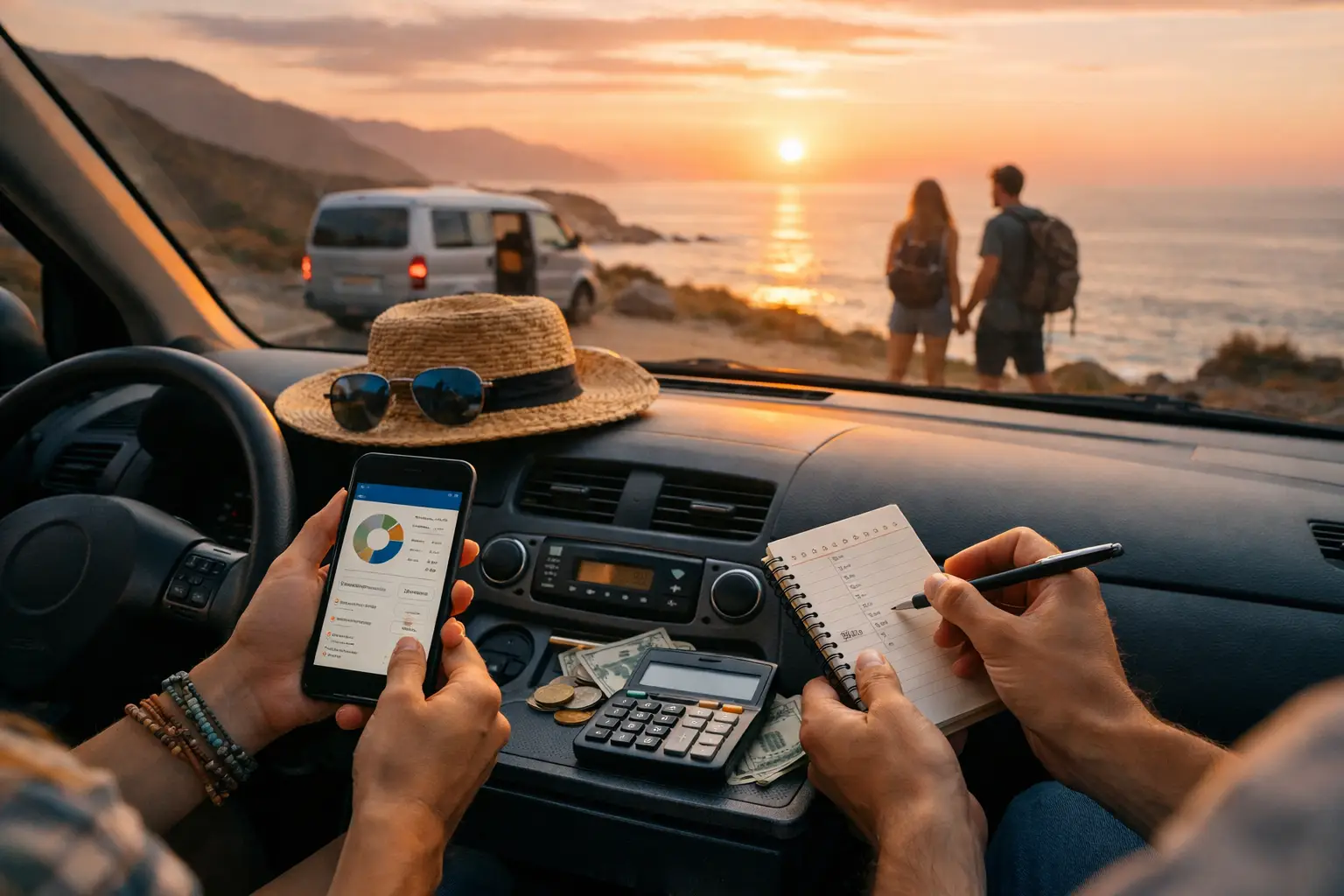
Quick answer: How do travellers track shared expenses without creating awkward conversations or a messy spreadsheet? They record each cost as it happens, assign who paid and who benefited, agree on categories before departure, and settle balances regularly rather than waiting until the trip ends. A shared travel expense tracker makes this far easier when fuel, campsites, groceries and bookings are changing every day.
A group road trip can look simple from the outside: load the van, split the fuel and find a good camp for the night. In practice, shared spending gets complicated quickly. One person pays for a campsite, another fills the tank, someone else covers groceries, and a booking made weeks earlier is suddenly forgotten. By the time the trip reaches its last stop, no-one is completely sure who owes what.
The fix is not more effort. It is a simple system that records costs while the details are still clear.
How do travellers track shared expenses fairly?
Fair does not always mean dividing every transaction by the number of people in the vehicle. Travellers need to decide what each expense covers. Fuel for a shared campervan may be split between everyone. A motel room might be shared by two people while another traveller sleeps in their own tent. A personal coffee is personal, but a carton of water for the esky is likely a group cost.
The most reliable approach is to agree on the rules before the wheels start turning. That conversation does not need to be formal, but it should cover the costs most likely to cause confusion: fuel, accommodation, food, tolls, activities, repairs and emergency purchases.
For a couple travelling in one caravan, the system can be as straightforward as tracking every cost against the trip budget. For friends in two 4WDs, each with different fuel use and maintenance demands, it may be better to keep vehicle costs separate and only split shared camps, food and activities. It depends on how the group is travelling and what everyone considers a shared benefit.
Record expenses at the point of purchase
The best time to log an expense is when the card is tapped, the cash changes hands or the booking confirmation arrives. Waiting until the evening usually means guessing at receipts, forgetting small purchases and mixing personal costs with group costs.
Each entry should include the amount, currency if travelling overseas, category, date, payer and the people included in the split. A short note helps too. “Fuel at Longreach” is more useful than “servo”, especially after several weeks on the road.
This creates a running record rather than a pile of receipts in the glovebox. It also makes it easier to spot where the money is going. Fuel, campground fees and groceries often look manageable individually, yet together they can push a trip well beyond its original budget.
Use categories that match real travel costs
Generic spending categories are rarely enough for long road trips. Travellers benefit from categories that reflect decisions they can actually act on, such as fuel, accommodation, groceries, eating out, attractions, tolls, repairs, servicing, gear and emergency costs.
Separating fuel from vehicle maintenance matters. Fuel is an operating cost that rises with distance, terrain and towing weight. A replacement tyre, wheel bearing or scheduled service is different: it may be essential to continue safely, but it does not necessarily belong in an everyday holiday spend figure. Keeping those costs visible separately gives the group a more honest view of what the journey is costing.
Set a shared budget before the trip starts
Tracking expenses only tells you what has already happened. A budget tells you whether the group can continue spending at the same pace.
Set a total trip budget, then give the major categories a realistic allowance. For example, a two-week lap through regional NSW and Victoria might allocate the largest share to fuel and accommodation, with a separate allowance for groceries, meals out, activities and a contingency fund. If the group plans to free camp often, accommodation may be lower, but vehicle repairs and supplies should not be ignored.
A useful budget is not a rigid promise. It is an early-warning system. If the fuel category is running high after a week of headwinds, towing or detours, the group can make practical changes: stay longer in one place, choose lower-cost camps, cook more often or reduce unnecessary driving days.
Want to track your own trip costs without spreadsheets? Create a free Trip Tracka account and start tracking fuel, food, accommodation, maintenance, budgets and trip expenses in one place.
Start Tracking Free
Choose a system everyone will actually use
A spreadsheet can work for a short break if one organised person is happy to manage it. The trade-off is that the spreadsheet owner becomes the trip accountant, chasing receipts and updating balances after everyone else has moved on to the next lookout or campsite.
A shared notes app is faster, but it can become unreliable when entries are edited, totals are calculated manually or no-one knows which note is current. Paper notebooks have the same issue, plus they are hard to search and nearly impossible to use for live category totals.
For groups travelling across multiple stops, a shared trip expense tool is usually the practical option. Everyone can add their own purchase, see the current total and check the balance without asking one person for an update. The important part is not fancy reporting. It is having one agreed source of truth that works from the first fuel stop to the final clean-up bill.
Keep shared and personal costs separate
This is the rule that prevents most disputes. A shared tracker should allow a traveller to record a cost without automatically charging the whole group.
Consider a family travelling with another couple. The families may split camp fees and bulk groceries, while each pays for their own meals out, children’s activities and personal shopping. If every card transaction is thrown into one shared pool, the final settlement becomes a negotiation rather than a calculation.
The same applies to vehicle ownership. If one traveller’s ute needs a service because it is due on schedule, that is normally their cost. If the group agrees to replace a damaged recovery strap used by everyone, it may be reasonable to split it. Discussing the principle early makes the later decision much easier.
Settle up during the journey, not only at the end
A running balance is useful, but a regular settlement is better. For weekend trips, settle once before heading home. For longer caravan, campervan or overlanding trips, choose a regular rhythm, such as every Sunday night, each time accommodation is paid, or whenever one person’s balance reaches an agreed amount.
Regular settlements keep the amounts manageable and give the group a chance to correct mistakes while everyone remembers the details. They also reduce the uncomfortable end-of-trip moment where one traveller discovers they have paid far more than expected.
There is no need to settle every coffee or $4 bag of ice immediately. That creates noise. Let small costs accumulate, but do not let them become invisible. The right frequency depends on the group’s budget, payment habits and trip length.
Watch for the costs that do not look shared at first
The bigger shared expense categories are obvious. The forgotten ones are what usually distort the final total. These may include parking, laundry, gas bottle refills, ice, campsite firewood, drinking water, tolls, booking fees, road permits, rubbish disposal, cleaning charges and replacement consumables.
For vehicle-based travel, it is also worth recording distance and fuel consumption alongside fuel spending. A group can then see whether higher fuel costs came from longer driving days, a tougher track, towing, idling or a change in fuel price. That context helps with future trip planning, especially for travellers building a realistic per-kilometre budget.
Make visibility part of the group routine
Shared expense tracking works best when it is treated as normal trip admin, not an accusation. Check the totals while planning the next few days, alongside route choices, fuel range, booked sites and vehicle needs. A two-minute review can reveal that the group is ahead of budget, needs to tighten spending, or has enough room for a worthwhile activity.
Trip Tracka brings those moving parts into one travel-focused dashboard, so shared expenses can sit alongside trip budgets, route stops, fuel records and maintenance history rather than being scattered across chats, receipts and spreadsheets.
Ready to replace the end-of-trip money scramble with clear, live travel records? Create your free account, set a trip budget and keep every shared cost visible from departure to home.
Start Tracking Free
A good shared expense system does more than calculate who owes whom. It lets travelling companions spend less time reconstructing transactions and more time deciding whether to take the scenic route, stay another night, or follow the track a little further.
---
By Craig Watts, founder of Trip Tracka Built by travellers, for travellers - Trip Tracka helps you plan better trips, track costs, organise gear, save stops and keep your travel records in one place.
Built while travelling full-time to help travellers plan trips, track expenses, manage budgets, record fuel, store gear details and keep travel records without spreadsheets.