
Road Trip Cost Planning Guide That Actually Works
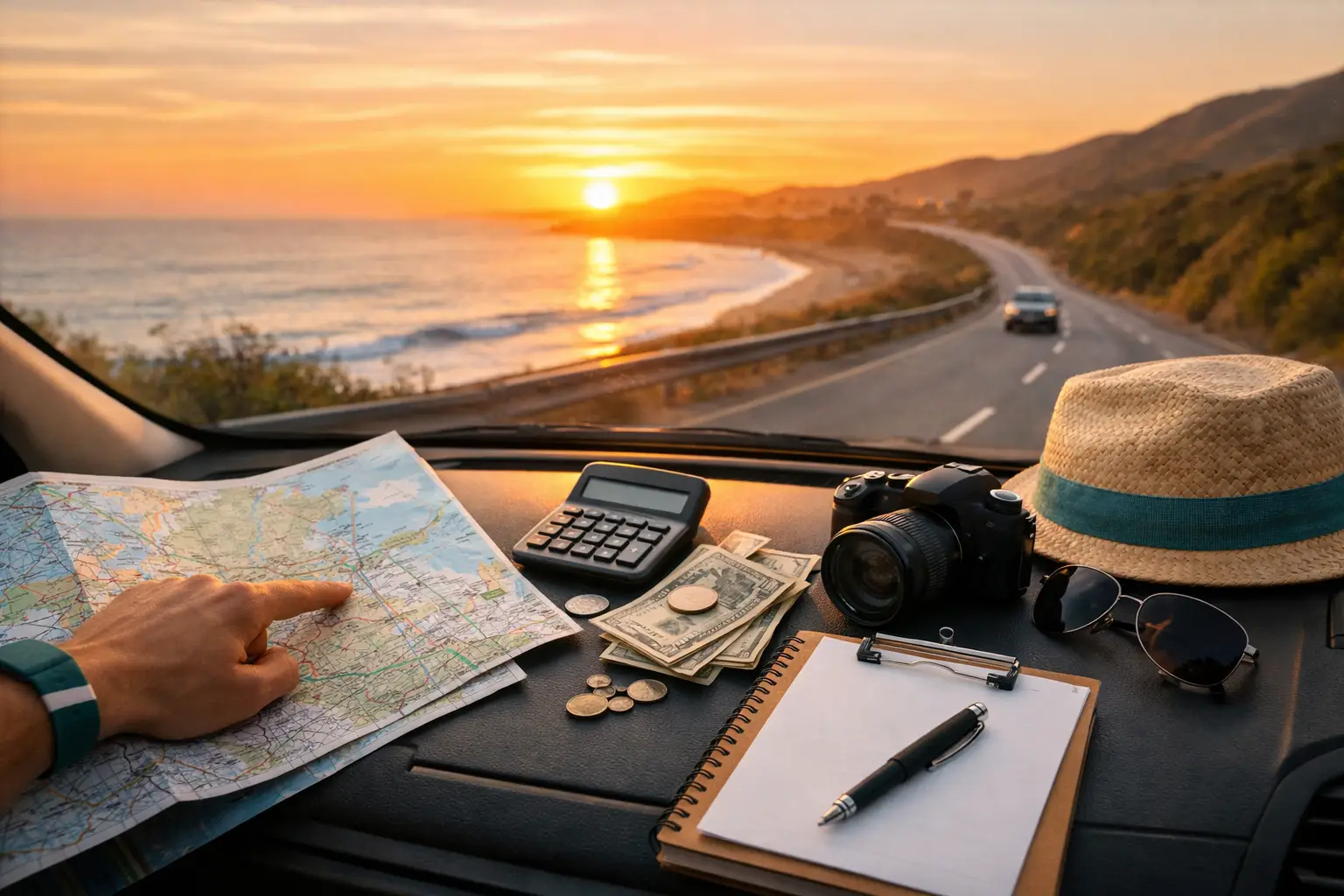
> Quick answer: A reliable road trip budget starts with your route, vehicle fuel use, accommodation style and travel pace. Calculate fixed costs first, estimate daily variable costs second, then add a 10-20% contingency for price changes, repairs and unplanned stops. Track actual spending by category each day so small overruns do not become an expensive surprise. > A road trip can look affordable on the map and become costly by the first fuel stop. A 3,000 km loop in a campervan, 4WD or family SUV is not just fuel and caravan parks. It is fuel economy into headwinds, booking fees, groceries bought when you are tired, a tyre repair in a regional town, and the decision to stay another night because the place is worth it. This road trip cost planning guide gives you a practical way to price the trip before you leave, then stay in control once the wheels are turning.
Start with the trip shape, not a random budget
The biggest budgeting mistake is setting one round number, then trying to force the trip to fit it. Start with the operating plan instead: where you will travel, how far you will drive, how long you will stay, who is travelling, and what vehicle is doing the work.
A fast point-to-point drive and a slow caravan lap can cover similar kilometres but have very different costs. A faster trip may use more fuel and paid accommodation because there is less time to find low-cost camps. A slower trip can reduce driving costs, but increases food, site fees and daily living expenses. Neither approach is wrong. The useful question is what your pace does to the total.
Set out the basics before assigning dollars:
- Total days and expected kilometres, including detours and local driving
- Vehicle type, towing weight and realistic fuel consumption
- Accommodation mix: free camps, caravan parks, motels, cabins or friends and family
- Travel group size and whether costs are shared
- Major activities, ferry crossings, permits, tours and bookings
- Known vehicle servicing or tyre work due before departure
Add 5-10% to your mapped distance for supermarket runs, lookouts, wrong turns, side tracks and the places you find after talking to other travellers. On a long Australian drive, those extra kilometres are rarely theoretical.
Build your road trip cost planning guide around real categories
A useful budget separates costs you can largely predict from costs that change every day. This makes it easier to see whether you need to adjust the route, reduce the daily spend, or simply allow more contingency.
Fuel and vehicle running costs
Fuel is usually the largest road-specific expense. Use your vehicle's real-world consumption, not the best number quoted in a brochure. If your 4WD averages 14 L per 100 km when loaded and towing, use 14 or slightly higher. Sand, hills, strong winds, idling and rooftop gear all affect the result.
Use this calculation:
Total kilometres ÷ 100 × litres per 100 km × expected fuel price = estimated fuel cost
For example, 3,500 km at 14 L per 100 km uses about 490 litres. At $2.05 per litre, that is $1,004.50 before detours or higher remote-area fuel prices. If your route reaches remote communities, price fuel conservatively rather than relying on metro averages.
Also budget for tolls, parking, ferry costs, oil top-ups, AdBlue where applicable, washing, tyre repairs and servicing. A pre-trip service is not just a maintenance line item. It can prevent a more expensive breakdown from consuming your travel fund and your time.
Accommodation, food and daily living
Accommodation should reflect how you genuinely travel, not your cheapest possible night. If you plan a mix of free camps and paid parks, estimate both and create an average nightly cost. Include powered sites, laundry, showers, dump-point fees where relevant, booking deposits and cancellation conditions.
For food, separate groceries from eating out. Groceries can remain manageable when you carry a meal plan and use the fridge well. Café breakfasts, pub meals and roadside snacks are where a daily budget can quietly blow out. Allow a set amount for treats. A trip budget that leaves no room for good coffee, bakery stops or a local meal is unlikely to hold.
Experiences, connectivity and the overlooked costs
National park passes, tours, fishing permits, museums, data top-ups, gas bottle refills and replacement camping gear all belong in the plan. So do pet fees if you travel with an animal, school holiday price increases, and insurance excesses you may need available in cash flow.
The goal is not to remove spontaneity. It is to know what spontaneity can cost without putting the rest of the trip under pressure.
Want to track your own trip costs without spreadsheets? Create a free Trip Tracka account and start tracking fuel, food, accommodation, maintenance, budgets and trip expenses in one place.
Start Tracking Free
Use three budget layers instead of one total
A single trip total is useful for saving before departure, but it is weak for decision-making on the road. Build three layers: a pre-trip fund, a daily operating budget and a contingency reserve.
Your pre-trip fund covers costs due before departure, such as servicing, new tyres, registration, insurance, gear replacement and booking deposits. Keeping these separate stops you from thinking the trip is over budget before day one.
Your daily operating budget covers fuel, accommodation, food and normal activities. Divide the expected total by the number of travel days, but do not expect every day to match. A long driving day might cost more in fuel but less in activities. A rest day can use little fuel while adding campsite, laundry and café costs.
Your contingency reserve should generally sit at 10-20% of the operating budget. Choose the higher end if you are towing, travelling remote, driving an older vehicle, crossing regions with expensive fuel, or travelling during peak periods. This reserve is for problems and opportunities, not a reason to stop checking the numbers.
Track actual spend from day one
Planning tells you what the trip may cost. Tracking tells you what it is costing. Record expenses as they happen, ideally before the receipt disappears into the glovebox or the details vanish after a long day on the road.
Use categories that match travel decisions: fuel, accommodation, groceries, dining out, activities, vehicle maintenance, transport, gear and miscellaneous. Vague categories such as “other” make a dashboard look tidy but teach you nothing. If fuel is running high, you can adjust driving days. If accommodation is higher than expected, add more free camps or shorten paid stays where that suits your travel style.
For fuel entries, record litres, price per litre, odometer reading and total paid. Over several fills, this reveals your actual fuel economy and cost per kilometre. That is more useful than guessing whether the ute or van is using more than expected. It also creates a better baseline for the next trip.
If you are travelling with a partner, family or convoy, agree on the rules before leaving. Decide which expenses are shared, who pays deposits, and whether one person records everything. A shared budget works best when everyone can see it, not when one person tries to reconcile messages and bank transactions at the end.
Review the plan at natural checkpoints
Do not wait until home to compare budget against reality. Review it after the first three days, then every week or at major route changes. Check total spend, daily average, remaining funds and each category against plan.
If you are ahead of budget, that does not mean you need to spend the difference. It may be the margin that pays for a tyre, a weather delay or a memorable detour later. If you are behind, make a specific adjustment. Cut two paid park nights, cook for several nights, reduce distance, or postpone a discretionary activity. General promises to “spend less” rarely change the next transaction.
A connected trip dashboard is particularly useful on extended journeys because the route, bookings, vehicle records and expenses affect each other. When a service interval is approaching, you can plan a stop and protect the budget. When a route changes, you can see the likely effect on kilometres and fuel rather than hoping it all balances out.
Make room for the trip you will remember
The best road trip budget is not the lowest possible one. It is the one that lets you travel confidently, maintain the vehicle properly, and say yes to the experiences that matter without returning home to a financial mess. Plan with realistic numbers, track the actuals, and change course early when the data says you need to.
Ready to replace scattered receipts, notes and spreadsheets with one travel record? Start tracking fuel, stays, food, maintenance and shared trip costs with Trip Tracka.
Start Tracking Free
A well-managed budget does not make a road trip less adventurous. It gives you the freedom to take the turn-off, stay the extra night and keep travelling with a clear view of what comes next.
By Craig Watts, founder of Trip Tracka
Built by travellers, for travellers - Trip Tracka helps you plan better trips, track costs, organise gear, save stops and keep your travel records in one place.
Built while travelling full-time to help travellers plan trips, track expenses, manage budgets, record fuel, store gear details and keep travel records without spreadsheets.