
How to Organise Overland Trip Expenses Properly
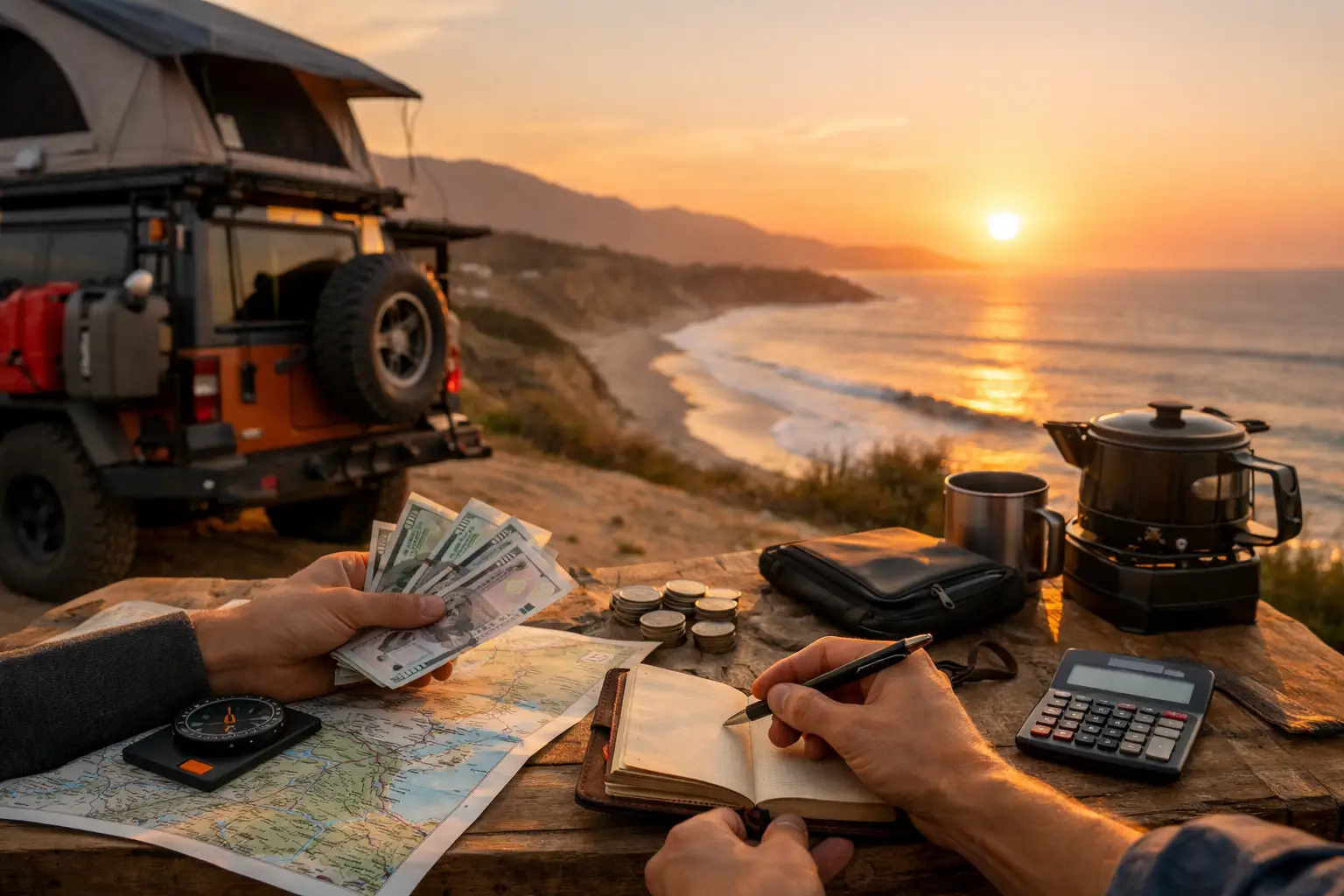
Quick answer: To organise overland trip expenses, create one trip budget, track every cost in consistent categories, record fuel and vehicle costs separately, and review your actual spend every few days. The goal is not to account for every cent perfectly. It is to know what the trip is costing while you can still make useful decisions.
A long overland trip rarely blows the budget because of one huge mistake. More often, it is a string of small costs: a fuel stop that costs more than expected, a few paid campgrounds, groceries bought without a plan, an unexpected tyre repair, or a ferry you forgot to allow for. By the time you add them up, the numbers can be confronting.
Learning how to organise overland trip expenses gives you control without turning travel into an accounting exercise. Whether you are touring Australia in a caravan, crossing borders in a 4WD, travelling in a campervan, or sharing a multi-vehicle trip with mates, the same principle applies: set up the system before departure, then keep it simple enough to use every day.
Start with a realistic total trip budget
Begin with the amount you can afford to spend, then work backwards. Include the obvious costs - fuel, accommodation, food and activities - but do not ignore the operational costs that come with vehicle-based travel.
For an overland trip, your budget should account for trip preparation, travel days and the return home. That means servicing before departure, insurance excesses, replacement gear, permits, tolls, vehicle maintenance, border charges where relevant, mobile data, laundry and a contingency fund. If your vehicle needs a major service or new tyres shortly after the trip, it may be fair to allocate part of that cost to the journey too.
There is no universal split that works for every traveller. Free camping can reduce accommodation spend dramatically, but it can increase fuel use if you are driving further from towns and facilities. Cooking at camp saves money, but only if you avoid buying food that goes off in the fridge. The useful number is the one that reflects how you actually travel.
Separate fixed costs from daily running costs
Fixed costs are paid before or at the beginning of the trip. Think ferry bookings, national park passes, insurance, vehicle preparation, permits and pre-booked accommodation. Put these in first, because they tell you how much flexibility remains.
Daily running costs change as the route unfolds. Fuel, food, campsites, attractions, repairs and supplies sit here. Divide the available amount by the number of travel days to create a daily guide. It is not a hard limit, but it makes a $180 camp night or an expensive detour visible in context.
Use expense categories that match life on the road
Generic banking categories are too broad for an overland journey. A supermarket transaction might include food, camp gas, water containers and a replacement torch. If everything becomes “shopping”, you lose the ability to see where money is actually going.
Use categories that help you make route and spending decisions. For most travellers, that includes fuel, accommodation, groceries, eating out, activities, transport and tolls, vehicle maintenance, repairs, gear, communications, insurance and miscellaneous. If you are travelling internationally, add visas, border fees, currency exchange and local transport.
Keep fuel separate from vehicle maintenance. Fuel is an expected running cost that reveals consumption and cost per kilometre. Maintenance and repairs show the health cost of travelling with your rig. Combining them can hide a fuel-efficiency problem or make a single repair look like a normal travel day.
For shared trips, also record who paid. Splitting every coffee is unnecessary for some groups, while others need exact balances. Agree on the approach before the wheels turn: equal split, household split, vehicle-by-vehicle, or individual spending plus a shared kitty for fuel and camps.
> Want to track your own trip costs without spreadsheets? Create a free Trip Tracka account and start tracking fuel, food, accommodation, maintenance, budgets and trip expenses in one place. Start Tracking Free
Record costs when they happen, not at the end of the week
The best expense tracker is the one you will still use after a long driving day, a wet pack-down and a late arrival at camp. Waiting until Sunday to enter receipts sounds efficient, but receipts disappear into the glovebox, amounts are forgotten and cash spending vanishes from the record.
Log the expense as soon as you pay, or make it part of your evening routine. Capture the amount, category, date and location. Add a short note only when it explains something useful, such as “remote fuel price”, “emergency wheel bearing”, or “three nights powered site”.
Digital payments make this easier, but do not rely entirely on bank feeds. A transaction may appear days later, use an unfamiliar merchant name, or combine multiple purchases. Recording it at the point of payment gives you cleaner, more useful data.
Treat fuel as a trip metric, not just an expense
Fuel is usually one of the biggest overland costs, and it is also one of the most informative. Each fill should record litres, price per litre, total amount, odometer reading and, where possible, whether it was a full tank.
This lets you calculate fuel economy, cost per kilometre and cost per day. Those figures help with more than budgeting. A sudden increase in litres per 100 km can point to headwinds, heavy loads, rough tracks, low tyre pressures or a vehicle issue worth checking before it becomes expensive.
Do not compare one isolated tank to another, especially after towing, sand driving or a stretch of mountain roads. Look at the pattern over several fills. The same applies to fuel pricing: remote areas can be costly, so build that reality into the route budget rather than treating every high-price fill as a surprise.
Include maintenance, repairs and gear replacement
A road trip budget that excludes maintenance is only telling part of the story. Even a well-prepared vehicle can need consumables, a puncture repair, a replacement hose, wheel alignment, oil top-up or a workshop visit. For longer trips, servicing intervals will arrive while you are away.
Create a vehicle reserve before departure. A practical amount depends on the age of your vehicle, route remoteness, towing load and mechanical history. A newer campervan on sealed roads needs a different reserve from an older 4WD on corrugated tracks.
Record maintenance against the vehicle as well as the trip. That preserves service history, helps you understand true ownership costs and makes future maintenance planning easier. Do the same for expensive gear replacements. A broken fridge, tent pole or recovery board is not everyday spending, but it still affects the trip budget.
Review the numbers every few days
Expense tracking only becomes useful when you compare the actual spend with the plan. A quick review every three to five days is enough for most trips. Check the total spent, remaining budget, daily average, top categories and any costs that are rising faster than expected.
If fuel is ahead of budget, you may choose shorter driving days, slower speeds or more nights in one location. If food spending is high, plan meals before the next supermarket stop. If accommodation is climbing, look for lower-cost camps or reduce paid-site nights later in the route. The point is to adjust early, not punish yourself after the trip.
For extended travel, assess costs by region as well as by category. A week in the Kimberley, Tasmania, New Zealand or a remote stretch of outback road will not cost the same as a week near major towns. Regional comparisons help you plan the next leg with clearer expectations.
Keep documents and reservations beside the budget
Expenses are easier to understand when they sit beside the bookings and trip decisions that created them. A $240 accommodation charge means something different when it is linked to a three-night stop, a vehicle repair booking or a weather delay.
Store booking confirmations, permits, insurance details, service records and key receipts in the same trip system. This reduces the familiar hunt through email, photos, notebooks and group messages when a payment is questioned or a booking needs changing.
For couples and group trips, give everyone access to the same current information. One person should not be the only holder of the budget, route, booking details and vehicle records. Shared visibility avoids duplicate purchases and makes it easier to make decisions when plans change.
> Ready to replace scattered receipts, fuel notes and budget spreadsheets? Put your route, costs, bookings and vehicle records into one travel dashboard. Start Tracking Free
Make the system fit the trip, not the other way around
A weekend getaway may only need broad categories and a single review at the end. A six-month lap of Australia needs daily fuel logs, maintenance records, shared costs and regular budget checks. More detail is valuable when it changes a decision. It is unnecessary when it only creates admin.
The right system should leave you with a clear answer to a few practical questions: What have we spent? What is costing more than expected? How much does the vehicle cost to run? What is still unpaid or upcoming? And can we keep travelling at this pace?
When those answers are available in minutes, you can spend less time sorting receipts at the camp table and more time choosing the next track, lookout or overnight stop.
Author and credibility
By Craig Watts, founder of Trip Tracka Built by travellers, for travellers - Trip Tracka helps you plan better trips, track costs, organise gear, save stops and keep your travel records in one place.
Built while travelling full-time to help travellers plan trips, track expenses, manage budgets, record fuel, store gear details and keep travel records without spreadsheets.