
Best Road Trip Planning Website for Real Trips
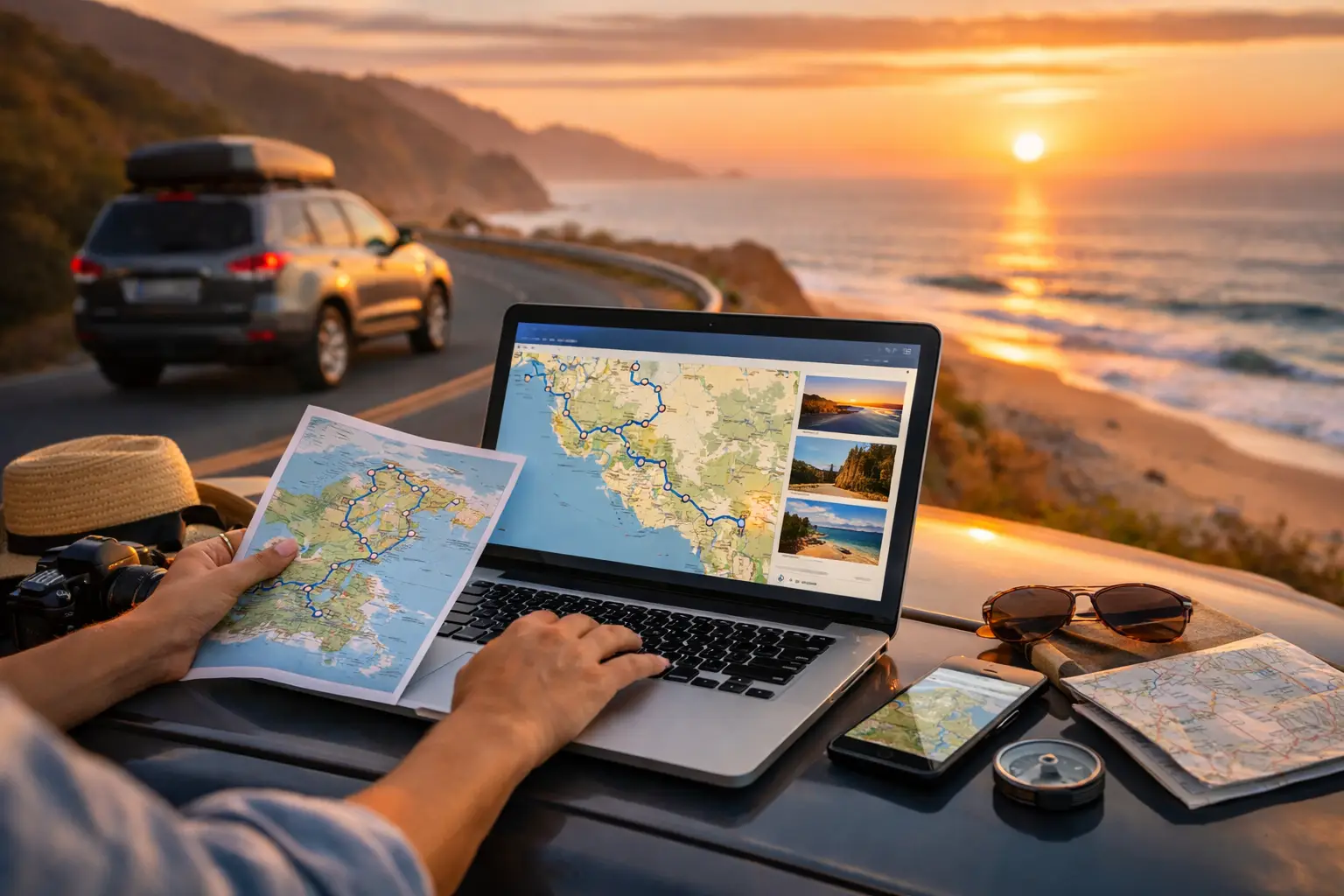
Quick answer
The best road trip planning website is the one that handles more than just maps. For real trips, especially long drives, campervan holidays, overlanding and multi-stop travel, you need route planning, budget tracking, fuel costs, bookings, vehicle records and shared trip details in one place.
If a tool only helps you plot stops, it is only solving part of the job.
You feel this about three days into a trip. The route is fine, but now you are checking fuel receipts on the servo counter, searching old messages for a campsite address, trying to remember when the last service was done, and guessing whether the budget will hold for another week. That is why the search for the best road trip planning website usually starts with maps and ends with something much bigger.
What makes the best road trip planning website?
Most people start by asking for a route planner. Fair enough. Route mapping matters. But if you are travelling any real distance, doing multiple stops, towing a van, travelling with family, or running a long-term lap, the best road trip planning website needs to act more like an operations dashboard than a simple map.
A useful platform should let you build an itinerary, save stops, keep accommodation and booking details together, and track what the trip is actually costing as you go. It should also help with the parts many travel apps ignore - fuel economy, per-kilometre costs, maintenance records, gear notes and group coordination.
That is the difference between planning a fantasy route and managing an actual trip.
Why maps alone stop being enough
A standard mapping tool is great for getting from Melbourne to Adelaide or finding the fastest way to Byron. It is less helpful when your trip includes campgrounds, detours, food costs, rego reminders, spare parts, ferry bookings, and shared planning across two or three travellers.
This is where many road trippers end up building their own system. One app for maps. A spreadsheet for costs. Notes on the mobile for camp spots. Photos of invoices. A maintenance notebook in the glovebox. A group chat full of half-buried booking confirmations.
It works, until it does not.
The best road trip planning website should remove that patchwork. It should give you one place to plan the route, monitor spending, store travel details and keep the vehicle side of the trip under control.
The features that matter most in practice
If you are comparing options, it helps to judge them against real travel tasks rather than polished screenshots.
First, look at itinerary planning. Can you build a trip with multiple stops in a clear order? Can you adjust the plan as conditions change? Road trips rarely stay fixed. Weather shifts, roads close, you stay an extra night somewhere good. A rigid planner becomes annoying very quickly.
Second, check whether it handles budgeting properly. Not just an estimated total, but live trip spending across fuel, food, accommodation, activities and maintenance. This matters even more for longer travel where small overspends become expensive habits.
Third, think about vehicle management. This is the part many tools skip entirely, yet it matters most to caravanners, overlanders, van travellers and anyone covering serious kilometres. Service history, fuel usage, tyre changes and repair notes are not admin for the sake of it. They help you avoid breakdowns and understand what the trip is really costing.
Fourth, see how it works for shared travel. If your partner, mates or convoy all need the same trip details, collaboration is not a bonus feature. It is core functionality.
Want to track your own trip costs without spreadsheets? Create a free Trip Tracka account and start tracking fuel, food, accommodation, maintenance, create budgets and trip expenses in one place. Start Tracking Free
Best road trip planning website versus best route planner
This is where travellers often compare the wrong things.
The best route planner is designed to build a path from A to B with stops in between. The best road trip planning website should do that, but also manage the operational side of travel. If you only need directions for a weekend drive, a route-first tool may be enough.
If you are doing a month on the road, a lap of Australia, a family caravan holiday, or a cross-border trip with bookings, expenses and vehicle upkeep to track, then route planning is only one layer.
That means the right answer depends on your trip style.
For short and simple travel, ease of route building probably matters most. For longer and more technical travel, budget control, trip records and vehicle management become far more important than whether the map pins look pretty.
What serious travellers usually need
Long-term travellers tend to care about three things more than casual holiday makers expect.
The first is cost visibility. Not rough guesses - actual numbers. Fuel is often the biggest moving expense, and once you add food, camps, paid sites, maintenance, permits and attractions, costs can drift quickly. A planning tool that also tracks real spend gives you better decisions on the road.
The second is record keeping. If you are travelling full-time or doing repeated trips, your travel data becomes useful over time. You can compare fuel economy between legs, see where the money went, review past stops and keep a proper vehicle history. That is far more practical than losing everything in old notes and chat threads.
The third is control. Not complexity for its own sake, but the confidence that the key details are where they should be. One dashboard beats six disconnected apps every time.
Where all-in-one tools pull ahead
An all-in-one platform is not automatically better. If it is clunky, bloated or hard to update on the road, it creates as many problems as it solves. But when it is built around how road travellers actually move, it can save a huge amount of friction.
That is where a platform like Trip Tracka stands out. Instead of stopping at route planning, it brings together itineraries, budgeting, expense tracking, fuel logs, vehicle servicing records, spare parts notes, community input and shared trip organisation in one system. That matters if your travel life includes more than just picking stops on a map.
For a solo traveller, that might mean understanding total trip cost per kilometre. For a family, it could mean keeping bookings and spending organised. For a caravan or 4WD setup, it might be the difference between knowing your maintenance history and trying to remember the last service from memory.
How to choose the right fit for your trip
The easiest way to choose is to start with the friction you want to remove.
If your biggest issue is plotting a route, choose the simplest planner that handles stops well. If your biggest issue is overspending, choose a tool with proper budget and expense tracking. If your biggest issue is staying organised across long-distance travel, look for one system that combines route, money and vehicle records.
Also be honest about how you travel. A couple doing two weekends away a year has different needs from a grey nomad towing a van through multiple states. A backpacker hiring a car for ten days needs something different again from an overlander managing gear, tyres, fuel range and service intervals.
The best road trip planning website is not the one with the most features on paper. It is the one that matches the way you actually travel and keeps working once the trip gets messy.
A better standard for road trip planning
Road travel has changed. Trips are longer, budgets are tighter, and more travellers want visibility over costs, logistics and vehicle readiness. The old method of maps plus spreadsheets plus scattered notes still exists because people have not had many better options.
That is changing. The strongest road trip planning tools are moving beyond route creation and into full trip management. That is a better fit for how travellers operate in the real world - especially those doing campervan travel, caravanning, overlanding, family road trips and extended touring.
Want to track your own trip costs without spreadsheets? Create a free Trip Tracka account and start tracking fuel, food, accommodation, maintenance, create budgets and trip expenses in one place. Start Tracking Free
If you are searching for the best road trip planning website, ask a practical question instead of a broad one. Not which tool looks best, but which one helps you stay organised, on budget and ready for the next leg. That is usually where the best choice becomes obvious.
By Craig Watts, founder of Trip Tracka Built by travellers, for travellers - Trip Tracka helps you plan better trips, track costs, organise gear, save stops and keep your travel records in one place.
Built while travelling full-time to help travellers plan trips, track expenses, manage budgets, record fuel, store gear details and keep travel records without spreadsheets.