
Best Apps for Route Budgeting on Road Trips
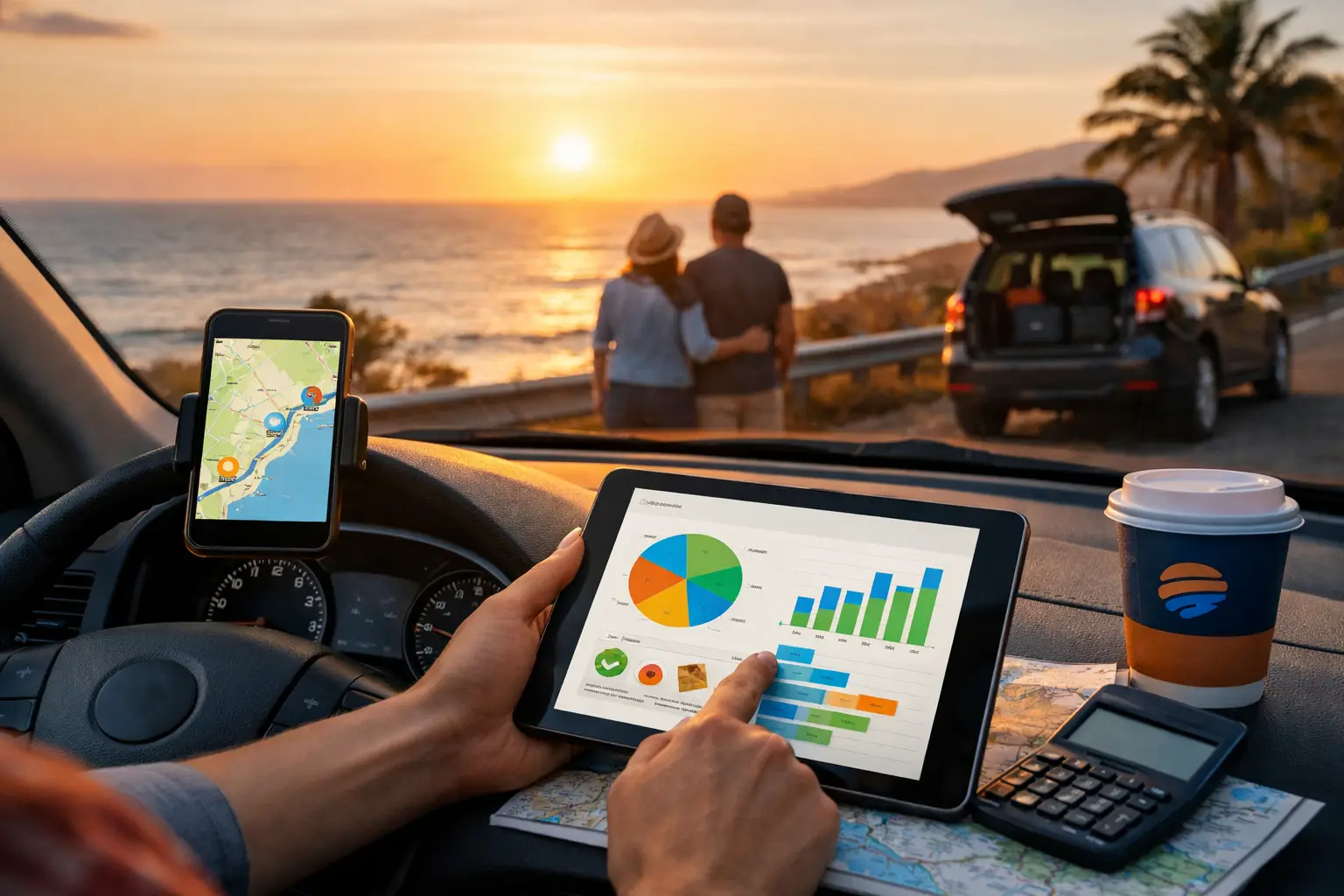
Quick answer: The best apps for route budgeting do more than add up fuel receipts. They connect your planned route with realistic fuel, accommodation, food, activity and vehicle costs, then show what is changing while you travel. For a weekend away, a simple expense tracker may be enough. For a caravan lap, van trip or multi-country overland route, use a travel-specific app that combines route planning, live budgets, fuel economy and shared trip records.
A road-trip budget can look sensible at the kitchen table and fall apart by the second servo stop. The route changes, fuel costs more than expected, a free camp is full, and a small mechanical issue becomes a big line item. That is why the best apps for route budgeting are not just calculators. They give you a working view of what the journey is costing, where the money is going, and what needs adjusting before the budget gets away from you.
What makes a route budgeting app genuinely useful?
Maps tell you where you are going. Banking apps tell you where the money went. Neither usually explains what your next 800 kilometres will cost or whether your vehicle is becoming the most expensive part of the trip.
A useful route budgeting app starts with the route and turns it into decisions. It should let you set a trip budget, add expected expenses, record actual spending and compare the two without rebuilding a spreadsheet every night. For vehicle travellers, it also needs to account for distance, fuel consumption and running costs, not just a generic “transport” category.
The right level of detail depends on how you travel. A backpacker moving between cities may prioritise accommodation, trains and food. A family towing a caravan will care about fuel cost per kilometre, park fees, groceries, tyres and servicing. A 4WD crew heading remote needs enough contingency for recovery gear, repairs and expensive outback fuel.
The strongest tools cover these connected jobs:
- route and stop planning alongside trip expenses
- budget categories for fuel, stays, food, activities and incidentals
- live spend versus planned spend
- fuel logs that calculate consumption and cost per kilometre
- vehicle maintenance records and upcoming service costs
- shared access for couples, families or travelling groups
If an app only tracks receipts after you pay them, it is an expense tracker. Helpful, but not a route budgeting system.
The main types of apps for route budgeting
There is no single best option for every traveller. Most people build a stack of apps because each tool solves one part of the problem well. The trouble is keeping all those pieces current once the wheels are turning.
Spreadsheet and general budget apps
Spreadsheets, banking categorisation tools and household budget apps are flexible. You can make categories for diesel, campsites and pub meals, then total them at the end of the week. They work well for travellers who enjoy building their own system and are disciplined about entering every transaction.
The trade-off is effort. Your route, bookings, fuel logs and maintenance reminders usually live elsewhere. A spreadsheet also cannot easily tell you the cost impact of taking the longer scenic road, adding a detour or changing from free camps to holiday parks for several nights.
Navigation and route-planning apps
Navigation apps are essential for mapping the drive, finding stops and estimating travel time. They are excellent at the route itself, but most are not designed to manage a complete travel budget. Fuel estimates can be broad, accommodation costs are often separate, and vehicle servicing is outside their scope.
Use these tools when getting from A to B is the main task. Pair them with a dedicated budget system if you need visibility across the whole trip.
Fuel price and fuel log apps
Fuel apps can help you find cheaper fuel and record fills. For high-kilometre travellers, even a small saving per litre adds up quickly. A proper fuel history also helps you spot a change in consumption, which can be an early warning that tyre pressure, load, driving conditions or vehicle health needs attention.
Their limitation is context. Fuel is one part of your route budget. Without accommodation, food, bookings, repairs and daily spending in the same picture, it is hard to see whether the trip itself is tracking to plan.
All-in-one travel management apps
For longer road trips, all-in-one travel apps are usually the better fit because the budget is connected to the work that creates it: routes, stops, vehicles, bookings, gear and people.
Trip Tracka is built for this operational side of travel. Instead of shifting between map pins, notes, fuel records, maintenance notebooks and group chats, you can plan a trip, allocate categories, record expenses and monitor the total from one dashboard. That matters when you are travelling for weeks or months, crossing borders, towing, or managing more than one vehicle.
Want to track your own trip costs without spreadsheets? Start Tracking Free with Trip Tracka and begin tracking fuel, food, accommodation, maintenance, budgets and trip expenses in one place.
How to choose the best app for your trip
Start with the costs that can derail your plans, not the app with the prettiest screen. For most road travellers, fuel and accommodation are the two largest adjustable categories. For remote travel, add maintenance and a healthy contingency. For a family holiday, activities, eating out and attraction tickets may be where the budget leaks.
Then check whether the app can handle your real travel pattern. A daily allowance is useful in cities, but it is less useful for a six-week loop where driving days, rest days and free camps vary wildly. You need categories that fit your trip and reporting that shows both total spend and category breakdowns.
Vehicle detail is another dividing line. If you are in a campervan, caravan, RV, 4WD or ute, look for fuel economy tracking and per-kilometre costs. These figures turn vague assumptions into useful planning numbers. If your rig averages 16 litres per 100 kilometres, you can estimate the impact of an extra 500-kilometre detour before committing to it.
For group travel, shared visibility is not a luxury. A budget app should make it clear who paid, what the expense was for and whether it belongs to the whole group or one traveller. That prevents the familiar end-of-trip confusion where everyone remembers the costs differently.
A practical route budgeting workflow
Good route budgeting is not about predicting every coffee. It is about creating enough structure to make better calls on the road.
First, build the route around major stops and expected travel days. Add known costs such as ferry bookings, park fees, accommodation deposits, permits and major activities. Next, set realistic categories for fuel, food, stays, activities, maintenance and a contingency fund.
Estimate fuel from your own vehicle data where possible. Manufacturer figures are rarely accurate for a loaded touring vehicle, especially with a caravan, roof racks, headwinds or corrugations. Use recent fuel logs to calculate an average, then allow extra for conditions. This is one reason an integrated fuel tracker earns its place in a route budget.
Once travelling, record expenses as they happen and review the budget at regular points - every fuel stop, every few days, or whenever the route changes. The point is not to obsess over every dollar. It is to notice patterns early. If accommodation is running high, you might schedule more low-cost stays. If fuel is below estimate, that money can support an activity, a better campsite or a buffer for later.
Maintenance deserves its own category, even if you hope not to use it. A puncture, wheel alignment, oil change or replacement part is not a surprise in the abstract. It is a predictable possibility for anyone covering serious distance. Keeping service history and parts records with the trip also makes future planning more accurate.
Common route budgeting mistakes
The biggest mistake is treating fuel as the entire transport budget. Fuel is visible, so it gets attention, but tyres, servicing, tolls, ferries, repairs and depreciation can matter just as much on a long journey.
Another is setting one total number with no categories. A $5,000 budget feels clear until you cannot tell whether you are overspending on stays, meals or attractions. Categories give you choices. They show what can be changed without ending the trip early.
Finally, do not budget from ideal conditions. Assume the occasional paid campsite, price jump, weather delay or mechanical job. A contingency is not pessimism. It is what lets you keep moving when the plan changes.
Ready to replace scattered notes and end-of-trip guesswork? Start Tracking Free with Trip Tracka and keep your route, budget, fuel records, maintenance and travel expenses together from the first kilometre.
The best route budget is not the one that predicts every expense perfectly. It is the one that stays useful when the road closes, the weather turns, the plan changes and you decide the unplanned stop is worth it.
By Craig Watts, founder of Trip Tracka Built by travellers, for travellers - Trip Tracka helps you plan better trips, track costs, organise gear, save stops and keep your travel records in one place.
Built while travelling full-time to help travellers plan trips, track expenses, manage budgets, record fuel, store gear details and keep travel records without spreadsheets.