
Overlanding Fuel Cost Tracker for Real Trip Budgets
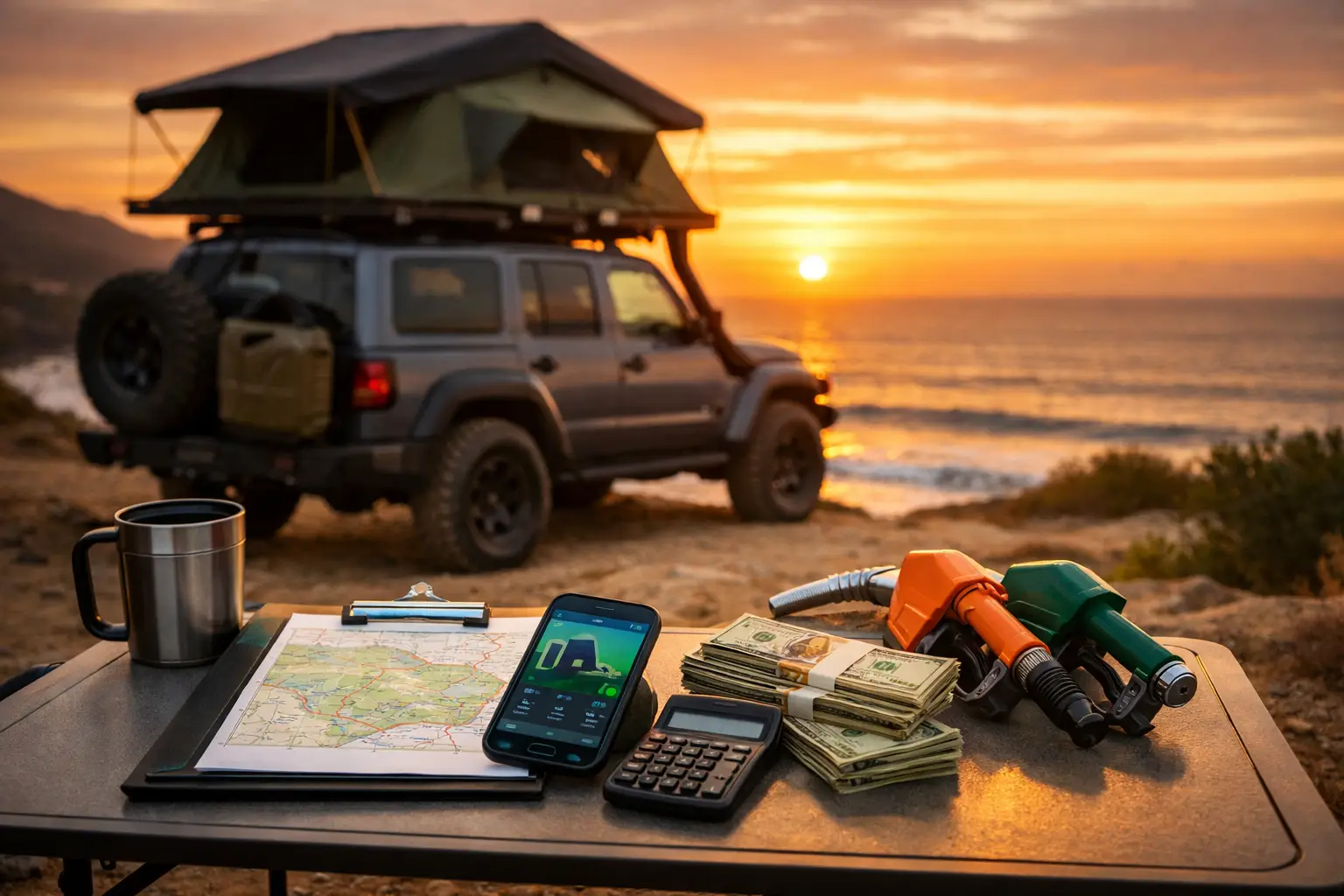
> Quick answer: An overlanding fuel cost tracker records each fuel fill, distance travelled, fuel price and vehicle economy so you can see your true cost per kilometre and remaining trip budget. The useful part is not just logging receipts - it is using the numbers to plan the next remote stretch, compare fuel stops and spot a thirsty vehicle before it becomes an expensive surprise.
A 4WD can look well prepared at the servo: long-range tank, jerry cans on the roof, recovery gear packed tight. Then the first few remote fills land at a much higher price than expected, the headwind picks up, and the fuel budget disappears faster than the red dirt behind you. An overlanding fuel cost tracker gives you a live view of what the journey is actually costing, rather than what you hoped it would cost when you left home.
For a weekend run, a rough estimate may be enough. For a Cape York route, a lap of Australia, a cross-border expedition or months in a camper, fuel is one of the biggest and least predictable costs. Tracking it properly turns fuel from a vague worry into a number you can act on.
What an overlanding fuel cost tracker should show
At the minimum, record the date, location, odometer reading, litres purchased and price paid for every fill. From there, your tracker should calculate distance since the last fill, litres per 100 kilometres, cost per kilometre and total fuel spend for the trip.
Those figures answer different questions. Litres per 100 kilometres tells you how the vehicle is performing. Cost per kilometre tells you what that performance means for the budget. Total spend shows whether fuel is taking a larger share of the trip than accommodation, food or activities.
For example, your loaded diesel wagon might normally return 13 L/100 km on sealed roads. Add corrugations, sand driving, roof racks, a caravan or a strong headwind and that can move sharply. If diesel costs $2.30 per litre and the vehicle averages 16 L/100 km, fuel alone costs about 36.8 cents per kilometre. Over 3,000 km, that is $1,104 before a single campsite, pub meal or repair.
The goal is not to chase perfect data. A missed receipt or a partial fill will happen. The goal is to create a reliable pattern across the trip, so your next decision is based on your vehicle and your route conditions.
Full fills produce cleaner fuel data
The most accurate economy calculation comes from filling the tank to a consistent point, driving, then filling it again. The litres on the second receipt represent fuel used over the distance travelled since the previous full fill.
Partial fills still matter for cash flow, especially where remote fuel stops are few and far between. Mark them clearly, but avoid treating them as an economy result unless you know the tank was filled to the same level at both ends of the calculation. A tracker that separates fuel purchases from validated full-fill economy data keeps the numbers useful rather than misleading.
Record conditions, not only litres
A basic fuel log tells you what happened. A better one explains why. Add a short note when the conditions change: towing, low-range work, extended idling, beach driving, mountain climbs, heavy rain or a loaded roof rack.
This context becomes valuable after a few weeks. You may find that your rig is economical on bitumen but noticeably dearer on long corrugated sections, or that the caravan costs more per kilometre than your original plan allowed. That is useful information for route choices, driving pace and future vehicle upgrades.
Start with a realistic fuel budget
A fuel budget should have three layers: your expected route distance, expected fuel economy and an allowance for higher-than-normal prices or consumption. Many travellers only calculate the first two, then get caught out by detours, closed roads, scenic side trips and remote roadhouse pricing.
Start with your route kilometres, then add a contingency. Ten to 20 per cent is sensible for many trips, while more remote or flexible journeys may need extra room. Apply an economy figure that reflects the loaded vehicle, not the optimistic number from daily commuting. Finally, use a conservative average fuel price where the route includes remote regions.
It depends on the trip. A self-contained camper travelling mostly sealed highways has a different risk profile to a heavily loaded 4WD towing through the outback. The point is to make the assumptions visible before they become a budget blowout.
Want to track your own trip costs without spreadsheets? Create a free Trip Tracka account and start tracking fuel, food, accommodation, maintenance, budgets and trip expenses in one place.
Start Tracking Free
Turn fuel entries into better decisions on the road
The strongest reason to track fuel is not retrospective reporting. It is making better calls while travelling.
If your actual cost per kilometre is above plan, you have options. You might shorten a detour, choose a cheaper overnight stop, slow down on the highway, reduce unnecessary idling or revise the spend available for the next leg. None of those choices need to ruin the trip. They simply stop small cost changes from becoming a nasty surprise at the end of the month.
Fuel tracking also helps with range planning. A claimed tank range is rarely the range you should depend on when the vehicle is loaded and travelling through remote country. Your own logged consumption gives you a more dependable estimate. If recent figures show 17 L/100 km rather than 13 L/100 km, your safe distance between fuel stops changes significantly.
Use the conservative recent average when planning sparse stretches. Keep a reserve rather than aiming to roll into the next servo on fumes. The extra margin is especially worthwhile where a station pump may be closed, out of fuel or further away than expected.
Watch for changes that point to a vehicle issue
A sudden rise in fuel use is not always a route condition. It can point to underinflated tyres, dragging brakes, an overloaded setup, a dirty air filter or an engine issue worth checking. No fuel tracker replaces a proper inspection, but a trend line can tell you when something has shifted.
That is why fuel records work best alongside maintenance records. When you can see servicing, tyre work and fuel economy in the same trip history, it is easier to tell whether higher consumption followed a change in terrain or a problem under the bonnet.
Avoid the spreadsheet trap
A spreadsheet can calculate fuel costs, but it asks you to build and maintain the system while you are meant to be travelling. Receipts pile up in the console. Someone forgets to enter a fill. One formula gets overwritten. Then the sheet becomes a post-trip chore instead of a planning tool.
A travel-specific tracker should connect each fuel entry to the vehicle and trip, update the category budget automatically and keep the information available on your mobile. When travelling with a partner or group, shared visibility matters too. The person driving, the person managing bookings and the person watching the budget should not be working from three different versions of the truth.
Keep entries quick enough to do at the bowser: odometer, litres, total cost and location. Add notes only where they explain an unusual result. Consistency beats complexity.
A simple routine that holds up for long trips
Make the fuel log part of the stop, not a task for later. Before leaving the servo, enter the odometer and receipt total. Confirm whether it was a full fill. Once or twice a week, check your average economy, total fuel spend and cost per kilometre against the budget.
Before a remote leg, review your most recent consumption rather than relying on a brochure figure or a memory from last year. If fuel prices or consumption have climbed, adjust early. A good overland budget is not fixed. It responds to the road.
Ready to replace scattered receipts and guesswork with a clearer trip budget? Track fuel, vehicle costs, bookings and daily spending together with Trip Tracka.
Start Tracking Free
The best fuel record is not the most detailed one. It is the one you will still use after a long driving day, when the light is fading and the next camp is still a few kilometres down the track.
---
By Craig Watts, founder of Trip Tracka Built by travellers, for travellers - Trip Tracka helps you plan better trips, track costs, organise gear, save stops and keep your travel records in one place.
Built while travelling full-time to help travellers plan trips, track expenses, manage budgets, record fuel, store gear details and keep travel records without spreadsheets.