
Trip Planning App Versus Spreadsheets for Road Trips
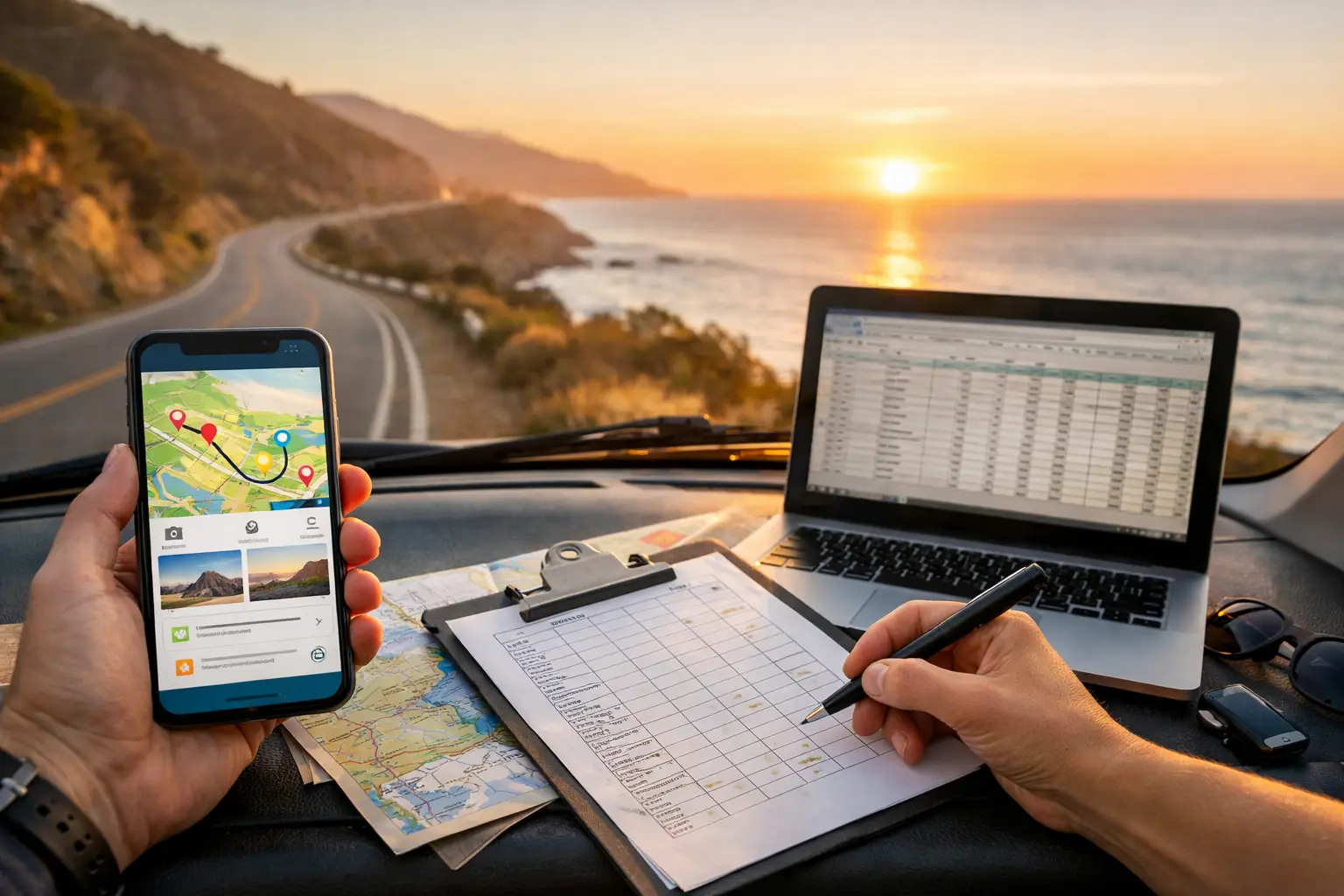
> Quick answer: A spreadsheet can work for a simple weekend away, but a trip planning app is better for longer road trips, shared travel, changing budgets and vehicle management. It keeps routes, bookings, fuel, expenses, servicing and group updates connected, so you spend less time fixing formulas and more time travelling. > > A fuel receipt disappears under the seat. Your partner updates the accommodation list, but not the budget tab. Someone in the convoy drops a new campsite pin into the group chat, where it is buried beneath photos of the sunset by morning. This is the real difference in the trip planning app versus spreadsheets debate: it is not just about where you type information. It is about whether your travel information stays useful once the wheels start turning. > > Spreadsheets have earned their place. They are familiar, flexible and often free. For a two-night getaway with one vehicle and a short list of costs, a basic sheet may be all you need. But when travel becomes longer, more mobile or shared with others, the manual system starts creating work of its own. > > ## When spreadsheets are still a good option > > A spreadsheet is useful when the trip is straightforward and the information will not change much. You might use one to estimate food, campsite and fuel costs for a weekend in the high country, or to compare a few accommodation options before booking. > > It also suits travellers who enjoy building their own formulas and only need a high-level cost estimate. You control every category, every column and every calculation. There is no learning curve beyond the spreadsheet software you already use. > > The trade-off is that the sheet relies on you. You need to enter every expense, update every route change, save every version and make sure the latest file is available on your mobile when you are standing at a servo or checking into a caravan park. A spreadsheet does not know that a fuel entry affects your trip total, fuel economy and per-kilometre cost unless you have built all of that logic yourself. > > ## Where a spreadsheet starts to break down > > The first issue is fragmentation. A typical road trip spreadsheet tracks planned costs, while booking emails sit in an inbox, locations live in a maps app, maintenance records stay in a notebook, and group decisions happen in chat. Each tool may do one job well. Together, they leave you searching across five places for one answer. > > The second issue is live visibility. A planned budget is useful before departure, but travellers need to know what is happening now. If fuel costs more than expected in a remote area, or a booking changes, you want to see the impact on the remaining budget immediately. With a spreadsheet, that usually means finding the right tab, entering the amount correctly and checking whether the formulas still work. > > Then there is collaboration. Sending a file back and forth creates version confusion. Cloud-based spreadsheets improve this, but they are still general-purpose tools. They do not naturally connect a stop to the booking, the budget, the vehicle’s fuel use and the people travelling with you. > > > Want to track your own trip costs without spreadsheets? Create a free Trip Tracka account and start tracking fuel, food, accommodation, maintenance, budgets and trip expenses in one place. > > > > Start Tracking Free > > ## Trip planning app versus spreadsheets: the practical difference > > The key advantage of a travel-specific app is connection. Instead of creating separate tabs for route planning, costs, fuel logs and vehicle maintenance, you work from one trip record. When you add an expense, it belongs to the trip and its category. When you record fuel, it can contribute to fuel spend, distance travelled, economy and cost per kilometre. When you save a stop, it remains part of the itinerary rather than becoming another forgotten map pin. > > For a caravan, campervan, 4WD or overlanding setup, this matters more than it does for a city break. Vehicle costs are not optional background details. Fuel, tyres, servicing, repairs, spare parts and recovery gear can meaningfully change the true cost of a journey. A generic spreadsheet can record these costs, but it does not give them travel context without considerable setup. > > A trip planning app also makes history valuable. After a few months on the road, you can look back at what a route actually cost, where the biggest spending categories were, how much fuel your vehicle used and which maintenance jobs were completed. That makes the next trip easier to budget and safer to prepare for. > > ### Budgeting while the plan changes > > No road trip follows the original plan perfectly. Weather closes a track. A free camp is full. A favourite town deserves an extra night. The point is not to force the trip to follow a rigid itinerary. It is to understand the operational effect of the change. > > With connected budgeting, adding an extra night of accommodation or a longer detour shows up in the overall trip picture. You can make a decision based on the money remaining rather than discovering the overrun after returning home. This is particularly useful for families, long-term travellers and anyone travelling through regions where fuel and supplies can vary sharply in price. > > ### Vehicle records are not just admin > > Many travellers track trip spending but ignore the vehicle record until something fails. That approach can make a small maintenance job expensive and disruptive, especially when you are far from home. > > Keeping servicing dates, maintenance notes, spare parts and repairs alongside travel records gives you a clearer picture of your rig. Before a long run across the outback or a multi-country drive, you can check what has been done and what is due. After the trip, you have a usable history instead of a pile of invoices in the glove box. > > ### Group travel needs one source of truth > > For couples, families and multi-vehicle groups, planning is partly a communication problem. One person may be managing bookings, another is tracking costs, and someone else has the best list of overnight stops. If those details are split between a shared sheet, messages and screenshots, the group loses time confirming basic information. > > A shared trip workspace keeps the current plan visible to the people who need it. It gives the group a place to discuss stops, record shared expenses and refer back to the same itinerary. That does not remove every decision from group travel, but it does remove a great deal of needless back-and-forth. > > ## Choosing the right system for your travel style > > Choose a spreadsheet if your trip is short, your planning is light and you genuinely enjoy maintaining a manual system. It is a sensible tool for one-off cost comparisons or a simple holiday budget. > > Choose a trip planning app when the journey has moving parts: multiple stops, ongoing fuel costs, bookings, a vehicle to maintain, a shared budget or more than one traveller making decisions. The more often you travel, the more valuable it becomes to keep records in a system built for the job. > > The best test is simple. Ask how long it takes to answer these questions while you are on the road: What have we spent? What is left in the budget? Where are we staying next? When is the vehicle due for servicing? If the answer requires opening several apps and scrolling through messages, your system is costing you attention. > > ## Start with the information you already have > > You do not need to recreate every old trip to get organised. Start with the next journey. Add the route, planned stops and budget categories, then record expenses as they happen. Include fuel from the first fill, keep booking details with the trip and note any maintenance completed before departure. > > Within a few days, you will have a clearer view than a static estimate can provide. More importantly, you will be building a travel record that helps with the next decision, the next service and the next adventure. > > > Ready to replace scattered tabs, receipts and group messages with one travel dashboard? Start tracking your next trip, your vehicle costs and your travel budget in one place. > > > > Start Tracking Free > > The right system should not make travel feel like office work. It should give you enough control to head down the next track knowing the budget, vehicle and plan are all accounted for. > > By Craig Watts, founder of Trip Tracka > Built by travellers, for travellers - Trip Tracka helps you plan better trips, track costs, organise gear, save stops and keep your travel records in one place. > > Built while travelling full-time to help travellers plan trips, track expenses, manage budgets, record fuel, store gear details and keep travel records without spreadsheets.