
How to Plan a Road Trip That Actually Works
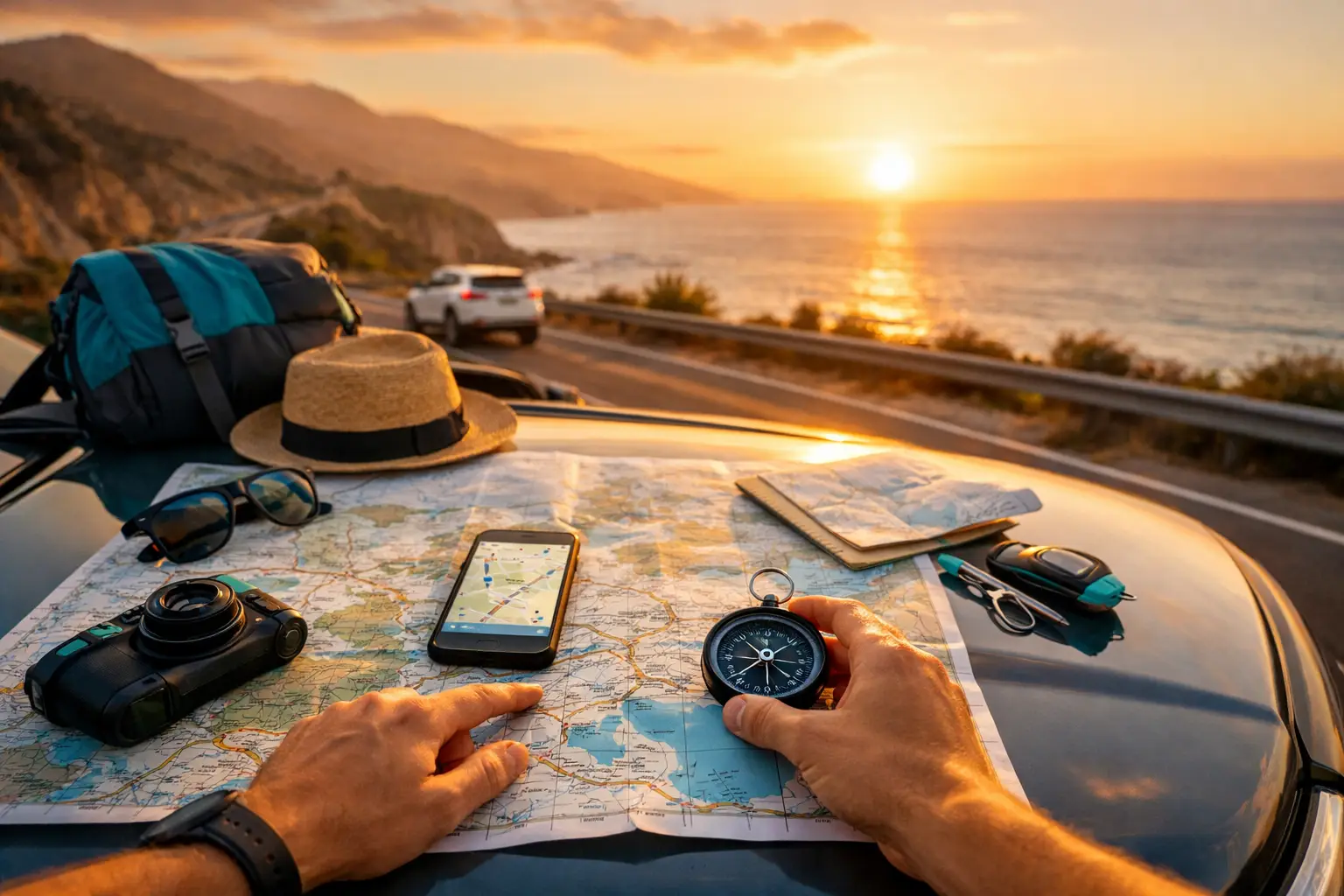
You can spot an unplanned road trip by day two. Someone is arguing about fuel money, the next stop is still "TBD", the esky is mostly drinks, and the tyre pressure should have been checked back in the driveway.
If you are wondering how to plan a road trip properly, the short answer is this: lock in the route, set a realistic budget, prepare the vehicle, map your overnight stops, and keep every moving part in one system so nothing gets missed.
Quick answer
How to plan a road trip starts with five decisions: where you are going, how long you have, what the trip can realistically cost, whether the vehicle is ready, and where you will stop each night. Once those are clear, the rest becomes much easier - fuel, food, accommodation, gear, maintenance and shared planning all fall into place.
The mistake most travellers make is treating a road trip like a loose idea instead of an operational plan. That is fine for a Sunday drive. It is not fine for a week in a campervan, a multi-state family holiday, or a remote run in a 4WD where fuel range and servicing matter.
Start with the shape of the trip
Before you compare campsites or save scenic lookouts, decide what kind of trip this actually is. A fast point-to-point journey needs different planning from a slow loop with plenty of stops. A solo escape has different tolerances from a convoy with kids, pets or multiple vehicles.
This is where a lot of road trips quietly go off track. People plan for the ideal version of the trip, not the real one. They imagine six-hour driving days but want long lunches, beach stops and late starts. They budget for fuel but forget park fees, coffee, ice, gas bottle refills and the extra night that happens when a place turns out better than expected.
Get clear on four basics early: your total days, your rough route, your daily driving comfort limit, and your must-see stops. Once those are set, you can build a trip that fits your time and energy instead of fighting both.
How to plan a road trip route without overcomplicating it
A good route is realistic before it is exciting. Yes, the exciting bits matter. But the best road trip plans account for fatigue, fuel access, road conditions and check-in times, not just postcard views.
Start broad. Choose your start point, end point and any non-negotiable stops. Then look at the distances between them and be honest about how much driving you actually want to do each day. For most travellers, 3 to 5 hours behind the wheel leaves room to enjoy the trip. More than that can work, but only if the goal is transit rather than experience.
Then pressure-test the route. Are there long stretches with limited fuel? Are you arriving at camp after dark? Are public holiday periods likely to affect availability? Is the road sealed all the way, or does your setup need extra prep for corrugations or gravel?
The right route is not the one with the most pins. It is the one you can complete without rushing, overspending or wearing out the driver and vehicle halfway through.
Build a budget that reflects the real trip
Road trips feel flexible, but costs stack up fast because they are spread across categories. Fuel is obvious. The rest sneaks in.
Start with the big four: fuel, accommodation, food and activities. Then add the costs people often ignore - tolls, park entry, ice, coffee, vehicle servicing, data, laundry, gas, recovery gear replacements and contingency money. If you are towing a caravan or driving a heavier setup, fuel usage and per-kilometre costs can shift more than expected depending on terrain and wind.
A simple total budget is better than no budget, but category tracking is what gives you control. If fuel is blowing out but food is under budget, you can adjust in real time. If accommodation costs are climbing, you can mix in free camps or lower-cost stops before the damage is done.
That is where an integrated tracker helps more than a spreadsheet. Instead of splitting your route in one app, receipts in another and fuel logs in your notes, you can see the trip as one moving system.
Want to track your own trip costs without spreadsheets? Create a free Trip Tracka account and start tracking fuel, food, accommodation, maintenance, create budgets and trip expenses in one place.
Book the stops that matter, leave room where it helps
Not every night needs to be locked in. But some absolutely should be.
If you are travelling in peak season, heading into popular coastal towns, national parks or school holiday periods, book key nights early. The same goes for ferry crossings, major events and any place with limited campsites. Nothing wrecks a good route like arriving tired and finding every option full.
At the same time, overbooking the entire trip can make the whole thing feel rigid. A useful balance is to secure the hard-to-get stops and leave some flexibility around transit days or areas with plenty of options. That gives you control without removing spontaneity.
When you save each stop, note arrival windows, check-in details, power access if relevant, and nearby fuel or grocery points. It sounds small, but these details reduce daily friction more than people expect.
Prepare the vehicle like it is part of the plan - because it is
A road trip plan that ignores the vehicle is half a plan. Your car, van, caravan or 4WD is not just transport. It is the platform the trip depends on.
Start with servicing. If a service is due during the trip, deal with it before you leave or schedule it properly. Check tyres, including the spare, fluids, battery condition, brakes, lights and any towing components. If you have a caravan or camper trailer, inspect the hitch, electrics, wheel bearings and brakes as well.
Then think beyond faults and into operating costs. If you know your average fuel economy, towing consumption and expected fuel prices across the route, your budget becomes much sharper. If you keep maintenance records and spare parts notes in one place, you are far less likely to forget the consumables and checks that matter before a long run.
This is especially true for extended travel. Once the trip gets longer than a weekend, vehicle records stop being admin and start becoming part of risk management.
Pack for access, not just completeness
Most packing mistakes are not about forgetting items. They are about packing the right items badly.
Heavy gear should be secure and balanced. Daily-use items should be easy to reach. Recovery gear should not be buried under bedding. Chargers, first aid, torches and wet-weather gear should be accessible without unloading half the vehicle on the side of the road.
It also pays to pack by trip rhythm. What do you need while driving, at a fuel stop, at lunch, at camp and overnight? Organising around moments instead of categories makes the whole trip smoother. Families, couples and group travellers especially benefit from this because shared gear gets messy fast when there is no system.
Keep everyone on the same page
Group trips rarely fail because of one big issue. They usually unravel through a pile-up of small misalignments. One person thought the stop was booked. Another assumed fuel would be split later. Someone changed the route in a message thread nobody saw.
If more than one person is involved, shared planning matters. Put the route, bookings, budgets and key notes in one place where everyone can see the current version. That cuts down confusion and keeps responsibilities clear.
Even on a couple's trip, this helps. It removes the mental load from one person carrying every detail and gives both travellers better visibility over timing, costs and next steps.
Leave margin for the trip to breathe
The best road trips are well planned, not tightly squeezed. Leave some time and money unallocated. That margin covers weather changes, slower roads, longer lunches, mechanical hiccups or simply the decision to stay an extra night somewhere good.
Planning every hour usually backfires. Planning every critical detail usually works.
That distinction matters. You want structure around route, cost, vehicle readiness and overnight stops. You do not need to script every bakery visit or beach walk. Good planning should create freedom, not remove it.
Want to track your own trip costs without spreadsheets? Create a free Trip Tracka account and start tracking fuel, food, accommodation, maintenance, create budgets and trip expenses in one place.
A simple road trip planning workflow
If you want a practical way to organise it, follow this order: define the route, estimate the budget, confirm the vehicle is ready, lock in key bookings, pack by daily use, then track spend and changes as the trip unfolds. That sequence works because each step sharpens the next one.
Trying to do it backwards usually creates rework. If you book first without understanding driving days, you may force long hauls. If you budget before checking fuel range and setup weight, your numbers may be optimistic. If you pack before confirming the trip style, you bring too much of the wrong gear.
A road trip becomes easier when the moving parts live together instead of scattered across notes, maps, receipts and chat threads. That is the difference between hoping the trip holds together and knowing it will.
By Craig Watts, founder of Trip Tracka
Built by travellers, for travellers - Trip Tracka helps you plan better trips, track costs, organise gear, save stops and keep your travel records in one place.
The best plan is not the fanciest one. It is the one that gets you out the driveway prepared, keeps the trip steady on the road, and leaves enough room for the good surprises.