
Best Road Trip Planning App Free Options
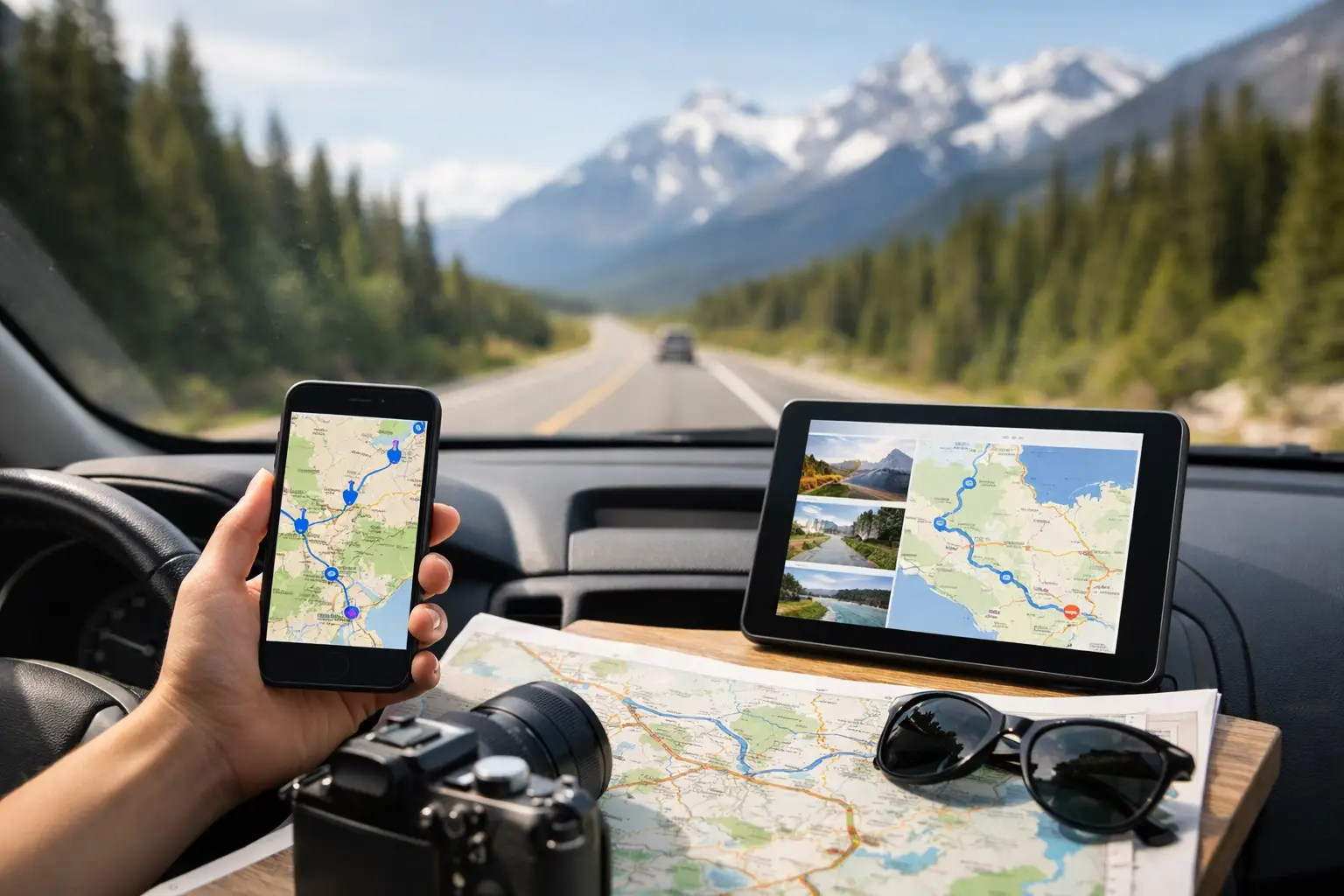
You can map a route in five minutes. You can also lose track of fuel costs, forget a booking, miss a service interval and end up with three versions of the same plan spread across notes, screenshots and group chats. That is where the search for a road trip planning app free to use usually starts - not with maps, but with the mess that builds around the trip.
For travellers who do more than a quick weekend drive, free planning tools are rarely judged on directions alone. If you are running a caravan setup, travelling in a campervan, crossing regions in a 4WD, or coordinating with a partner or convoy, the real question is simple: can the app help you stay organised without forcing you back into spreadsheets and notebooks?
The short answer is that some free apps are useful, but most solve one part of the problem rather than the whole thing. One app handles navigation. Another tracks expenses. Another stores booking emails. Another reminds you about servicing, if you remember to enter it. That patchwork works for a while, until the trip gets longer, more expensive or more complex.
A better way to assess any free road trip planner is to look at the operational side of travel first.
Want to track your own trip costs without spreadsheets? Create a free Trip Tracka account and start tracking fuel, food, accommodation, maintenance, create budgets and trip expenses in one place.
Start Tracking Free
What a road trip planning app free version should actually do
If an app only gives you a route line on a map, it is not really planning your trip. It is only helping you drive it.
Proper trip planning starts before the wheels move. You need to know where you are stopping, what those stops cost, how far you are covering each day, when fuel use spikes, whether the vehicle is due for maintenance, and what has already been booked and paid for. On a longer trip, those details are not extras. They are the difference between a trip that feels under control and one that constantly needs fixing on the fly.
That is why the best road trip planning app free options tend to fall into two groups. The first group is map-first. These are good for plotting a route and finding points of interest, but thin on budgets, servicing and record keeping. The second group is management-first. These are built for travellers who want one place to track the route, spend, vehicle data and planning notes together.
Neither approach is automatically better. It depends on how you travel.
If you are doing a short holiday with fixed accommodation and a rough fuel budget, a lighter app may be enough. If you are full-time on the road, towing a van, or balancing camp fees, groceries, diesel, maintenance and multiple bookings, free tools that stop at navigation will start to feel incomplete very quickly.
The trade-off with most free road trip planning apps
Free apps almost always come with limits. That is fair enough. The issue is whether those limits affect the part of travel you care about most.
Some free plans cap the number of stops or trips. Others keep the route planner open but lock budgeting, collaboration or history behind a paid tier. Some apps are generous at the start, then become awkward once you want to compare trip costs over time or keep proper records for your vehicle.
For road travellers, the most common trade-off is fragmentation. You might get a free route planner, but still need a separate expense tracker. You might get fuel tracking, but no booking management. You might be able to store a trip plan, but not connect it to maintenance records or cost-per-kilometre data.
That matters because road travel costs are rarely obvious in the moment. Fuel is only part of the picture. There is accommodation, food, park fees, tolls, servicing, tyres, repairs and all the small purchases that add up. If your planning app does not connect those numbers back to the trip, you are still doing manual admin somewhere else.
How to choose a road trip planning app free for real travel
Start with your travel style, not the app store rating.
If you mostly take short trips in one vehicle and just need a cleaner way to organise stops, a simple route-based app can do the job. Look for easy stop editing, offline access if you head remote, and a clear day-by-day itinerary.
If you travel often, live on the road, or run a more complex setup, focus on the back-end features. Can you set a budget before departure? Can you log fuel and see how it affects total spend? Can you record maintenance and parts so nothing gets lost between trips? Can other travellers in your group see the same plan without endless message threads?
These are not niche features. They are practical tools for people who treat travel as something to manage properly.
A free app is only valuable if it reduces work. If you are still copying booking details into notes, checking service dates in old photos and adding fuel receipts into a spreadsheet later, the app has not really replaced anything.
Where all-in-one planning starts to make sense
This is the point where many travellers move away from single-purpose tools. Not because maps stop mattering, but because maps are only one part of the trip.
An all-in-one platform makes more sense when your route, budget and vehicle records affect each other. That is common in caravanning, overlanding and extended touring. A long drive day changes fuel spend. A rough section of road affects maintenance. An extra stop changes accommodation costs. A shared trip needs everyone on the same plan.
Trip Tracka is built around that operational reality. Instead of splitting route planning, expense tracking, bookings, servicing and collaboration across different apps, it keeps them in one dashboard. That means you can plan stops, monitor trip spend, track fuel economy, log maintenance and keep your travel records connected rather than scattered.
The free entry point matters here because it lets travellers start without committing to a full paid setup on day one. That is useful if you want to test whether one structured system suits your travel style better than your current mix of notes, maps and spreadsheets.
Want to track your own trip costs without spreadsheets? Create a free Trip Tracka account and start tracking fuel, food, accommodation, maintenance, create budgets and trip expenses in one place.
Start Tracking Free
Features that matter more than a pretty map
A polished interface is nice. It is not what saves a trip.
What matters more is visibility. You should be able to open the app and understand where you are going, what you have spent, what is coming up and what needs attention. For serious road travellers, the most useful features tend to be trip budgeting, expense categories, fuel logging, route stops, booking storage, vehicle service history and shared access.
Fuel tracking deserves special attention because it gives context to nearly every other decision. If your costs per kilometre rise sharply on a certain leg, that affects how far you want to push the next day. If towing changes your average consumption, you can plan more accurately instead of guessing. General travel apps often miss this because they are built for flights and accommodation first, road use second.
Vehicle records are another big separator. A road trip planning app that ignores maintenance is only handling half the job for anyone travelling long term. Service intervals, tyres, repairs and spare parts are part of trip readiness. When they live inside the same system as your route and costs, you spend less time checking different places and more time moving with confidence.
Free is useful, but only if it scales with you
A free app can be the right starting point. It lets you test workflows, organise your next trip and avoid paying for features you may never use. But there is a difference between a free tool that helps you begin and a free tool that boxes you in as soon as your travel becomes more demanding.
That is why the best choice is not always the app with the longest feature list. It is the one that matches how you actually travel now, while still leaving room for longer routes, more detailed budgeting, more vehicles or shared planning later.
For some travellers, that will mean using a lightweight route planner for occasional getaways. For others, especially those doing bigger kilometres, carrying more gear, watching costs closely or managing a rig properly, an integrated system will save time almost immediately.
Road trips feel spontaneous from the driver’s seat. Behind the scenes, the good ones are usually well managed. Pick the tool that helps you keep that control without turning the trip into admin.