
How to Track Hotel, Motel and Accommodation Costs While Travelling
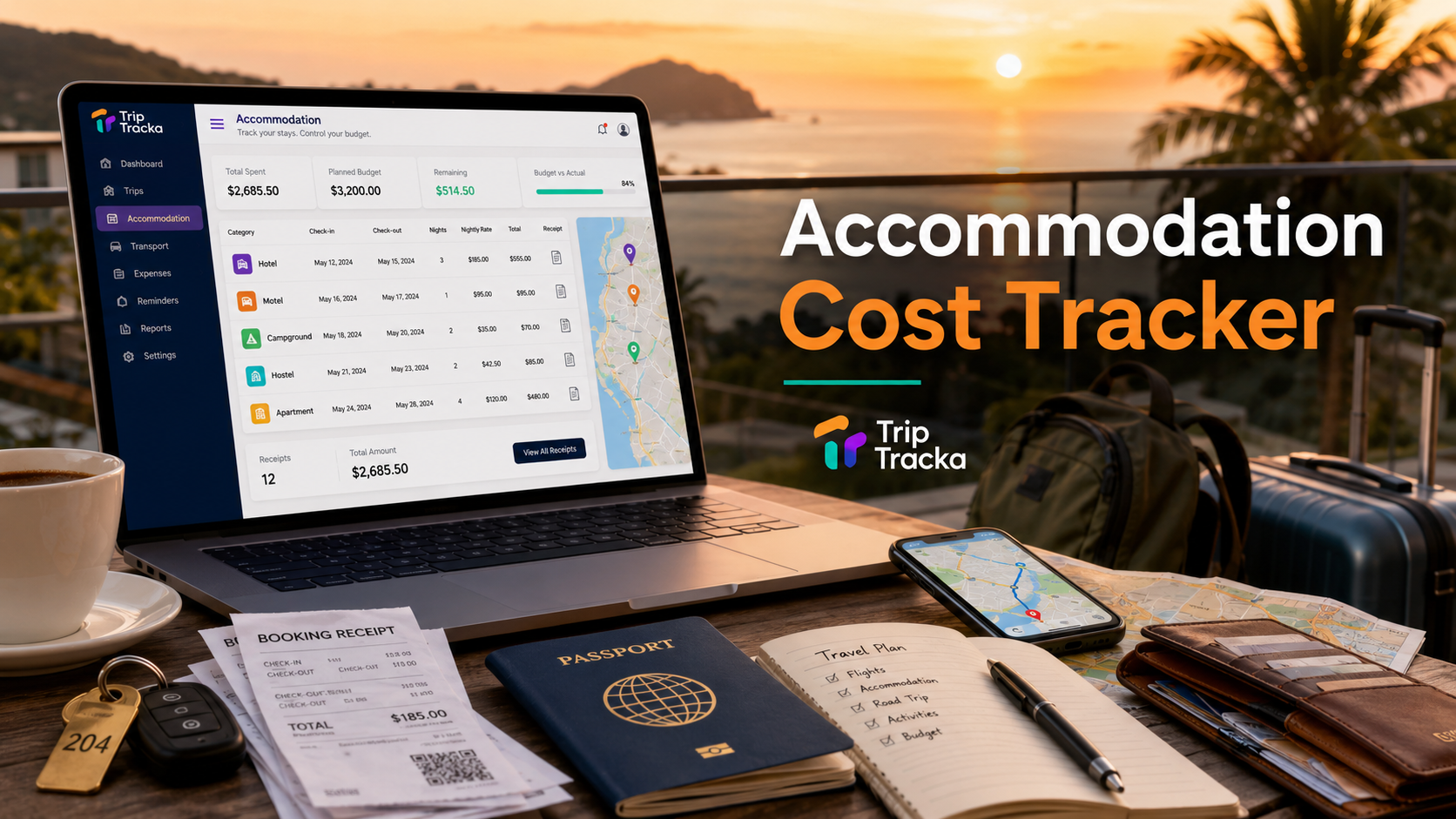
How to Track Hotel, Motel and Accommodation Costs While Travelling
Accommodation is one of the biggest travel costs.
Hotels, motels, hostels, campgrounds, caravan parks, apartments, cabins, resorts, short stays and overnight stops can quickly become the largest part of a trip budget.
The problem is that many travellers do not track accommodation properly.
They book one night here.
A motel there.
A last-minute hotel.
A campground.
A family cabin.
A hostel.
A holiday park.
An airport hotel.
A city apartment.
A beach stay.
A cleaning fee.
A resort fee.
A parking fee.
A late checkout.
A booking deposit.
By the end of the trip, they know they spent money, but they do not know where it went.
That is why learning how to track hotel, motel and accommodation costs matters.
A good accommodation cost tracker helps you see what you planned to spend, what you actually spent and how much each night really cost.
With Trip Tracka, travellers can plan routes, build budgets, track accommodation expenses, record travel costs, monitor fuel usage and keep trip details organised in one place.
This guide will show you how to track hotel, motel and accommodation costs properly, how to calculate your average nightly spend and how to keep accommodation from blowing out your travel budget.
Why Accommodation Costs Are Easy to Underestimate
Accommodation can look affordable when you only look at one night.
A motel for $130 does not sound too bad.
A hotel for $180 might seem fine.
A campground for $45 feels cheap.
A cabin for $220 may be worth it for one night.
But travel is rarely one night.
Over a longer trip, accommodation adds up quickly.
Example:
| Average Nightly Cost | Trip Length | Total Accommodation Cost |
|---|---|---|
| $75 per night | 14 nights | $1,050 |
| $120 per night | 21 nights | $2,520 |
| $180 per night | 30 nights | $5,400 |
| $250 per night | 14 nights | $3,500 |
| $300 per night | 21 nights | $6,300 |
This is why accommodation should never be treated as a rough guess.
It should be planned, tracked and reviewed during the trip.
A Trip Budget Planner helps you set your accommodation budget before you leave, while a Travel Expense Tracker helps you record what you actually spend.
What Accommodation Costs Should You Track?
Accommodation is not always just the nightly rate.
To understand the true cost, track the full amount.
Include:
- Hotel rooms
- Motel rooms
- Hostels
- Campgrounds
- Caravan parks
- Cabins
- Apartments
- Short stays
- Resorts
- Holiday parks
- Airport hotels
- Overnight parking
- Cleaning fees
- Booking fees
- Resort fees
- Tourist taxes
- Parking fees
- Extra guest fees
- Pet fees
- Linen fees
- Late checkout fees
- Deposits
- Cancellation costs
- Upgrade costs
This matters because a room advertised at one price can end up costing more once fees are added.
If you only track the room rate, your travel budget will not be accurate.
A proper Travel Expense Tracker lets you record accommodation as a real travel expense, alongside fuel, food, activities, gear and transport.
Step 1: Set an Accommodation Budget Before You Leave
Before your trip begins, decide how much you are willing to spend on accommodation.
Start with your total trip budget.
Then decide how much of that budget should go toward stays.
Example:
Total trip budget: $5,000
Accommodation budget: $1,500
Trip length: 15 nights
$1,500 ÷ 15 nights = $100 per night
Your target accommodation cost is:
$100 per night
This does not mean every night must cost exactly $100.
It means your average needs to stay around $100 per night.
You could spend:
- $180 for a hotel one night
- $40 for a campground another night
- $120 for a motel another night
- $0 with family or a free legal overnight stay
- $160 for a cabin on a bad weather night
As long as the average stays close to your target, your budget can still work.
Use the Trip Budget Planner to set your accommodation budget before you leave so you know what number you are working with.
Step 2: Track Planned vs Actual Accommodation Spending
The most important part of accommodation tracking is comparing planned vs actual.
Planned cost is what you expected to spend.
Actual cost is what you really spent.
Example:
| Stay | Planned Cost | Actual Cost | Difference |
| Night 1 Motel | $120 | $135 | +$15 |
| Night 2 Campground | $45 | $45 | $0 |
| Night 3 Hotel | $160 | $210 | +$50 |
| Night 4 Cabin | $180 | $170 | -$10 |
| Night 5 Apartment | $220 | $260 | +$40 |
Total planned: $725
Total actual: $820
Difference: +$95
That $95 may not seem huge, but if that pattern continues for weeks, the trip budget can blow out quickly.
A Travel Expense Tracker helps you record real accommodation costs while you travel, so you can adjust before the budget gets away from you.
Step 3: Calculate Your Average Nightly Cost
Your average nightly cost is one of the most useful accommodation numbers.
Formula:
Total accommodation spend ÷ number of nights = average nightly cost
Example:
Total accommodation spend: $1,680
Number of nights: 14
$1,680 ÷ 14 = $120 per night
Your average nightly cost is:
$120 per night
This number helps you make better travel decisions.
If your target was $100 per night and your real average is $120, you know you need to adjust.
You might choose:
- A cheaper motel
- A campground
- A hostel
- A cabin with kitchen facilities
- A free or lower-cost stay
- Fewer high-cost city nights
- More nights in one place to reduce moving costs
Accommodation tracking gives you control.
Without the numbers, you are only guessing.
Step 4: Track Accommodation by Type
Different types of accommodation affect your budget differently.
Track accommodation by type so you can see what is really costing the most.
Useful categories include:
- Hotels
- Motels
- Hostels
- Campgrounds
- Caravan parks
- Cabins
- Apartments
- Resorts
- Free stays
- Overnight parking
- Family or friend stays
Example:
| Accommodation Type | Nights | Total Cost | Average Cost |
| Hotels | 5 | $1,100 | $220 |
| Motels | 4 | $560 | $140 |
| Campgrounds | 6 | $270 | $45 |
| Cabins | 2 | $420 | $210 |
| Free stays | 3 | $0 | $0 |
This makes it easy to see where you can save.
If hotels are pushing the budget too high, you can balance them with cheaper nights. If campgrounds are helping keep the trip affordable, you can plan more of them.
Trip Tracka is useful because your accommodation spending can sit inside your overall travel expenses, not separate from the rest of the trip.
Step 5: Track Accommodation by Location
Accommodation costs can change dramatically by location.
A city hotel may cost more than a regional motel.
A beach stay may cost more in peak season.
A national park cabin may be expensive because options are limited.
An airport hotel may cost more because of convenience.
A remote motel may cost more because there are fewer choices.
Track costs by stop or location so you know where the money is going.
Example:
| Location | Nights | Total Cost | Average Nightly Cost |
| City centre | 3 | $780 | $260 |
| Coastal town | 4 | $640 | $160 |
| Regional motel | 2 | $260 | $130 |
| Campground | 5 | $250 | $50 |
| Airport stop | 1 | $230 | $230 |
This helps you plan future trips better.
If cities are expensive, you may stay just outside the city. If airport nights are high, you may adjust flight times. If beach towns are costly in peak season, you may travel shoulder season.
A Travel Planner helps connect your route, stays, budgets and travel costs so each stop makes more sense.
Step 6: Save Accommodation Receipts
Receipts matter.
They help you confirm what you paid, when you paid it and whether extra charges were added.
For every hotel, motel or accommodation booking, save:
- Booking confirmation
- Payment receipt
- Tax invoice
- Deposit confirmation
- Cancellation policy
- Refund record
- Security deposit details
- Parking fees
- Cleaning fees
- Extra charges
- Final checkout receipt
This is useful for:
- Budget tracking
- Refunds
- Travel insurance
- Business travel
- Tax records
- Group trip cost splitting
- Checking unexpected charges
- Proving what was paid
If you are travelling for weeks or months, accommodation receipts can become messy fast.
Save them as soon as you receive them.
Then record the real cost inside your Travel Expense Tracker.
Step 7: Watch for Hidden Accommodation Costs
The nightly price is not always the final price.
Watch for hidden or extra accommodation costs like:
- Cleaning fees
- Booking fees
- Resort fees
- City taxes
- Tourist taxes
- Parking charges
- Wi-Fi fees
- Linen hire
- Extra guest charges
- Pet fees
- Early check-in
- Late checkout
- Security deposits
- Cancellation fees
- Card surcharges
- Currency conversion fees
These costs can make a cheap stay much more expensive.
Example:
Advertised room rate: $140
Cleaning fee: $35
Parking: $25
Booking fee: $12
Total real cost: $212
If you only budgeted $140, you are already $72 over.
This is why real accommodation expense tracking matters.
Step 8: Track Deposits and Prepaid Accommodation
Accommodation costs can be confusing when some stays are prepaid and others are paid later.
You might pay:
- Full amount upfront
- Deposit now, balance later
- Pay at check-in
- Pay at checkout
- Refundable bond
- Non-refundable booking fee
Track when the money actually leaves your account.
For budgeting, it can help to record:
- Total stay cost
- Deposit paid
- Balance remaining
- Payment due date
- Refundable bond
- Cancellation deadline
This helps avoid thinking a stay is fully paid when there is still a balance due.
It also helps you avoid double counting.
For longer trips, prepaid accommodation can make your current spending look lower than it really is unless you track it properly.
Step 9: Track Accommodation for Group Trips
Group trips need clear accommodation tracking.
One person may book the hotel.
Another may pay the deposit.
Someone else may transfer money later.
The group may split rooms differently.
Some people may stay fewer nights.
Someone may upgrade their room.
Someone may cancel.
To avoid confusion, track:
- Total accommodation cost
- Who paid
- Who stayed
- Number of nights
- Cost per person
- Deposits paid
- Balance owing
- Refunds
- Extra charges
Example:
Total motel cost: $720
People staying: 4
Cost per person: $180
If one person only stays two of the three nights, you may need to split the cost differently.
A Travel Expense Tracker is useful because group travel costs can quickly become messy when everything is stuck in messages.
Step 10: Track Accommodation for Family Travel
Family accommodation costs are different from solo travel.
Families often need:
- Larger rooms
- Extra beds
- Kitchen facilities
- Laundry
- Parking
- Safe location
- More space
- Family-friendly facilities
- Easy check-in
- Flexible cancellation
- Close access to shops or activities
A cheaper room is not always cheaper if it creates extra costs.
For example, a motel with no kitchen may mean more eating out. A hotel with paid parking may cost more than expected. A cabin with cooking facilities may cost more upfront but save money on meals.
When tracking family accommodation, record notes like:
- Kitchen available
- Laundry available
- Parking included
- Family room
- Extra bedding
- Walkable location
- Nearby supermarket
- Kids’ facilities
- Whether it was worth the cost
This helps you plan better family trips in the future.
A Travel Planner helps families keep routes, stays, budgets and expenses organised together.
Step 11: Track Accommodation for Backpacking Trips
Backpackers often move between hostels, budget hotels, guesthouses, shared apartments and overnight transport.
Accommodation costs can change from country to country.
Track:
- Hostel beds
- Private rooms
- Guesthouses
- Apartments
- Overnight buses
- Overnight trains
- City taxes
- Laundry
- Lockers
- Luggage storage
- Booking fees
For backpackers, daily accommodation cost is a key number.
Example:
Total accommodation spend: $900
Trip length: 30 nights
$900 ÷ 30 = $30 per night
A Backpacking Trip Planner can help with routes, daily budgets, accommodation planning, gear and shared expenses.
Step 12: Track Accommodation for Road Trips, Camping and Campervans
Road trip accommodation can be mixed.
You might use:
- Motels
- Hotels
- Caravan parks
- Campgrounds
- Free camps
- Cabins
- Holiday parks
- Roadside stops
- National park campsites
- Friends or family stays
This can make your average nightly cost harder to understand unless you track every stay.
Example:
| Stay Type | Nights | Cost |
| Motels | 4 | $600 |
| Campgrounds | 6 | $270 |
| Free legal stays | 3 | $0 |
| Cabins | 2 | $420 |
| Caravan parks | 5 | $350 |
| Total | 20 | $1,640 |
Average:
$1,640 ÷ 20 = $82 per night
For a camping trip, use the Camping Trip Planner to connect campsites, gear, routes and budgets.
For campervan travel, use the Campervan Trip Planner to plan overnight stops, fuel, budgets and accommodation-style costs.
For road trips, use the Road Trip Planner to organise your stops, route, fuel and travel costs.
Accommodation Cost Tracking Example
Here is a simple example for a 14-night trip.
| Night | Stay Type | Planned Cost | Actual Cost | Notes |
| 1 | Motel | $120 | $135 | Parking extra |
| 2 | Motel | $120 | $120 | No extra fees |
| 3 | Hotel | $180 | $210 | City tax added |
| 4 | Campground | $45 | $45 | Good value |
| 5 | Campground | $45 | $45 | Good value |
| 6 | Cabin | $180 | $170 | Discount applied |
| 7 | Free stay | $0 | $0 | Family |
| 8 | Motel | $130 | $145 | Late check-in fee |
| 9 | Apartment | $220 | $260 | Cleaning fee |
| 10 | Apartment | $220 | $220 | Prepaid |
| 11 | Campground | $45 | $45 | Good value |
| 12 | Hotel | $180 | $195 | Parking extra |
| 13 | Motel | $130 | $130 | No extra fees |
| 14 | Airport hotel | $220 | $240 | Early flight |
Total planned: $1,815
Total actual: $1,960
Difference: +$145
Average nightly cost:
$1,960 ÷ 14 = $140 per night
This kind of tracking helps you see what actually happened.
Maybe hotels were more expensive than expected. Maybe campgrounds helped balance the budget. Maybe parking and cleaning fees were the real problem.
Once you know, you can plan smarter next time.
How to Lower Hotel, Motel and Accommodation Costs
Accommodation tracking is not only about recording spending.
It also helps you save money.
Here are practical ways to reduce accommodation costs.
Mix Accommodation Types
Do not use the same stay type every night.
Mix hotels, motels, campgrounds, cabins, hostels, apartments and cheaper stays where they make sense.
This helps balance comfort and budget.
Watch the Average, Not Just the Nightly Price
One expensive night is not always a problem.
The average nightly cost matters more.
If you have a high-cost hotel night, balance it with cheaper nights later.
Stay Longer in One Place
Moving every night can increase costs.
Longer stays may reduce nightly rates, cleaning fees, transport costs and food costs.
Check Parking and Extra Fees
A hotel that looks cheap may become expensive once parking and fees are added.
Always track the full cost.
Use Kitchen Facilities
Accommodation with a kitchen may cost more upfront but save money on eating out.
For families, this can make a big difference.
Travel Outside Peak Times
Accommodation prices can rise during school holidays, festivals, weekends and peak seasons.
Travelling outside peak times can reduce costs.
Track Costs During the Trip
Do not wait until the trip is over.
If your accommodation spending is too high, adjust early.
Use a Travel Expense Tracker so you can see the real numbers as you go.
Common Accommodation Tracking Mistakes
Only Tracking the Room Rate
The room rate is not always the final cost.
Track taxes, parking, cleaning fees, booking fees and deposits too.
Forgetting Prepaid Stays
If you paid before the trip, it is still part of the trip cost.
Record it.
Not Saving Receipts
Receipts help with refunds, insurance, tax records and checking unexpected charges.
Save them as soon as possible.
Not Comparing Planned vs Actual
A budget only works if you compare it with real spending.
Track both.
Ignoring Average Nightly Cost
Average nightly cost helps you understand whether your accommodation budget is on track.
Do not only look at individual nights.
Mixing Accommodation With Other Expenses
Accommodation should be its own category.
If it is mixed into “miscellaneous,” you will not see what is really happening.
Forgetting Group Payments
For group trips, record who paid and who owes what.
Accommodation is usually one of the biggest shared costs.
Why Trip Tracka Helps Track Accommodation Costs
Trip Tracka helps travellers understand what trips really cost.
Instead of using a mix of screenshots, receipts, booking emails and spreadsheets, you can organise travel costs in one place.
With Trip Tracka, you can use the Travel Expense Tracker to record accommodation, camping, fuel, food, activities, transport, gear and daily costs.
You can use the Trip Budget Planner to set an accommodation budget before you leave and compare planned vs actual spending.
You can use the Travel Planner to connect routes, stays, budgets and expenses.
You can use the AI Trip Planner to generate route ideas, day-by-day plans and travel cost estimates.
You can use the Road Trip Planner for road trips with motels, campgrounds, caravan parks and overnight stops.
You can use the Fuel Tracker to track fuel beside accommodation so you understand the full trip cost.
That gives you a clearer picture of your travel spending, not just one piece of it.
Related Trip Tracka Tools
Plan routes, stops, stays, budgets and expenses with the Travel Planner.
Create accommodation, food, fuel and activity budgets with the Trip Budget Planner.
Track hotel, motel, campground, hostel, food, fuel, activity and gear expenses with the Travel Expense Tracker.
Generate route ideas, stop suggestions and travel cost estimates with the AI Trip Planner.
Build road trip routes with motels, campsites, fuel stops and budgets using the Road Trip Planner.
Track fuel usage, fill-ups and real cost per kilometre or mile with the Fuel Tracker.
Plan camping trips with campsites, gear, routes and budgets using the Camping Trip Planner.
Plan campervan trips with overnight stops, fuel, budgets and travel costs using the Campervan Trip Planner.
Plan backpacking trips with accommodation, daily budgets, routes, gear and shared expenses using the Backpacking Trip Planner.
Final Accommodation Cost Tracking Checklist
Before and during your trip, track:
- Accommodation name
- Accommodation type
- Location
- Check-in date
- Check-out date
- Number of nights
- Planned cost
- Actual cost
- Deposit paid
- Balance owing
- Receipt saved
- Booking confirmation saved
- Parking fees
- Cleaning fees
- Tourist taxes
- Extra charges
- Refunds
- Cancellation terms
- Average nightly cost
- Notes about value
- Whether you would stay again
The goal is not to make travel boring.
The goal is to make travel clearer.
When you know what your accommodation is really costing, you can make better decisions, avoid budget surprises and spend more of your travel money on the experiences that matter most.
That is what Trip Tracka is built for.
FAQs
How do I track hotel costs while travelling?
Track the full hotel cost, including room rate, taxes, parking, booking fees, cleaning fees, deposits and extra charges. Record the planned cost, actual cost, number of nights, receipt and average nightly cost. Trip Tracka’s Travel Expense Tracker helps keep hotel costs organised by trip and category.
How do I track motel costs on a road trip?
Record each motel stay with the location, number of nights, nightly rate, total cost, receipt, parking fees and notes. For road trips, use the Road Trip Planner to plan stops and the Travel Expense Tracker to track the real cost.
What is the best way to track accommodation costs?
The best way to track accommodation costs is to set a budget before you leave, record every stay as an expense, save receipts and compare planned vs actual spending during the trip.
How do I calculate average nightly accommodation cost?
Use this formula: total accommodation spend ÷ number of nights = average nightly cost. For example, if you spend $1,400 over 10 nights, your average nightly cost is $140 per night.
Should I track accommodation deposits?
Yes. Track deposits, balances owing, refundable bonds and payment due dates. This helps you avoid double counting and makes your trip budget more accurate.
What accommodation costs should I include in my travel budget?
Include hotels, motels, hostels, campgrounds, caravan parks, cabins, apartments, cleaning fees, booking fees, tourist taxes, parking, pet fees, late checkout fees and cancellation charges.
Can Trip Tracka track hotel, motel and accommodation costs?
Yes. Trip Tracka’s Travel Expense Tracker lets travellers record accommodation and other trip expenses by category, while the Trip Budget Planner helps compare planned vs actual spending.
How do I stop accommodation costs from blowing out?
Set an average nightly target, track actual spending during the trip, watch for hidden fees, mix accommodation types and adjust early if you are going over budget.
Is accommodation tracking useful for backpackers?
Yes. Backpackers should track hostels, guesthouses, hotels, shared apartments, city taxes, lockers, luggage storage and overnight transport. The Backpacking Trip Planner can help with routes, daily budgets, gear and shared expenses.
Is accommodation tracking useful for camping and campervan trips?
Yes. Campgrounds, caravan parks, cabins, paid campsites and free stays all affect your average nightly cost. Use the Camping Trip Planner or Campervan Trip Planner to plan stays, routes and budgets.
Ready to stop guessing what your accommodation is really costing?
Use Trip Tracka to plan your route, create an accommodation budget, track hotel and motel expenses, save travel costs by category and understand your real average nightly spend.
Create your free Trip Tracka account today and start tracking your travel costs with confidence.
Track Your Accommodation Costs
Comments
Be the first to comment.