Multi Stop Route Planner for Better Road Trips
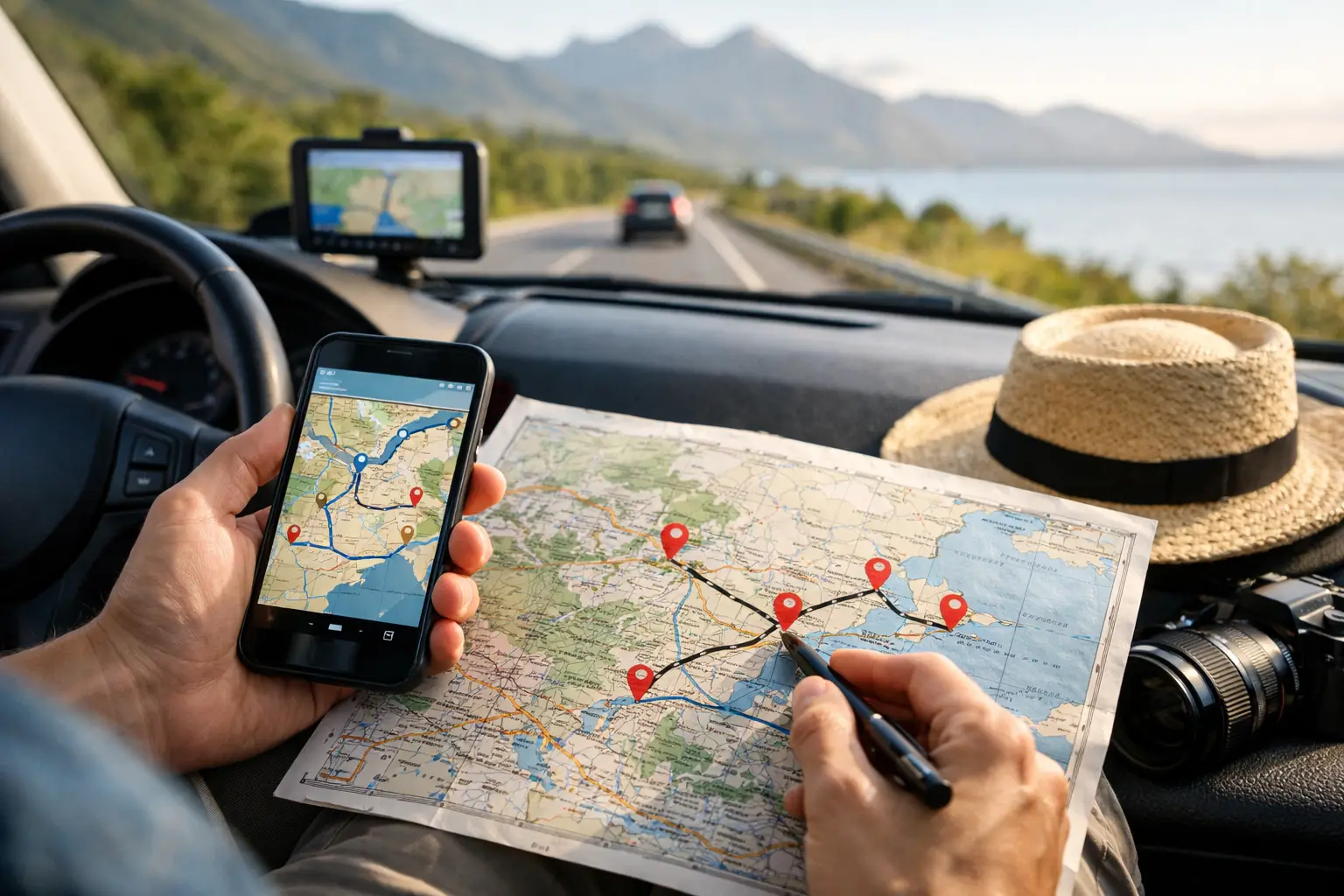
If your trip has more than two points on the map, a basic directions app stops being enough fast. A multi stop route planner gives you control over the part of travel that usually gets messy - the order of stops, drive times, fuel logic, overnight timing, and all the small decisions that turn a good road trip into a stressful one.
That matters whether you are planning a weekend loop, a month-long RV run, or a group trip with three vehicles and five opinions. The more stops you add, the more route planning becomes an operations job, not just a navigation task.
What a multi stop route planner actually solves
Most travelers start with a familiar map app and a rough list of places they want to hit. That works for a coffee stop and a final destination. It breaks down when your route includes scenic detours, campground check-ins, grocery runs, fuel planning, meetup points, and backup overnight options.
A multi stop route planner helps organize all of that into one usable route. Instead of manually dragging stops around and guessing what makes sense, you can map the trip in sequence and see how each change affects the rest of the day. Move one overnight stay and your fuel stop, arrival window, and next morning's drive might all change with it.
That is the real value. It is not just about adding extra pins. It is about understanding the chain reaction between route decisions, time, cost, and coordination.
Why basic map tools hit a limit
Basic map apps are great for getting from A to B. Some can handle a few extra stops, but they are not built for full trip management. They usually focus on directions, not the broader logistics around the route.
For road trippers, overlanders, RV travelers, and group planners, that creates friction. You might have directions in one app, booking notes in another, fuel costs in a spreadsheet, and group updates buried in a chat thread. Nothing is technically impossible, but everything takes longer and errors start to creep in.
A true multi stop route planner is different because it treats the route as the backbone of the trip. Stops are not isolated points. They are connected to timing, budget, travelers, vehicles, and bookings.
The best multi stop route planner is not just about speed
A lot of people assume route planning is mainly about finding the fastest order. Sometimes it is. If you are delivering goods, maximizing efficiency may be the whole goal. Travel is different.
On a road trip, the best route is often a balance. You might want the shorter drive, but not if it cuts out a national park stop or pushes you into a late campground arrival. You may prefer fewer miles in one day because your group includes kids, pets, or a second driver who is not comfortable on mountain roads after dark.
That is why the right route planner should help you weigh trade-offs, not pretend there is only one correct answer. Faster is not always better. Cheaper is not always easier. More stops are not always more fun if the trip starts feeling rushed.
What to look for in a multi stop route planner
The best tool depends on how you travel, but a few features matter almost every time.
First, it should make stop sequencing easy. If you cannot quickly reorder destinations and see the impact on the route, planning becomes trial and error.
Second, it should support trip context, not just navigation. A fuel stop is different from a scenic lookout, which is different from an overnight booking or a maintenance check before a long stretch. When every stop looks the same, the plan gets harder to read.
Third, collaboration matters more than most people expect. Even solo travelers often need to share updates with friends or family, and group trips definitely need a cleaner system than passing screenshots around.
Fourth, budget visibility matters. A route choice affects fuel, tolls, overnight stays, and sometimes vehicle wear. If your route planner has no connection to trip costs, you are only seeing part of the picture.
Finally, think about vehicle reality. RVs, caravans, vans, and overlanding rigs do not travel like compact cars. Distance, terrain, fuel range, and maintenance windows all shape the route.
Multi stop route planning for different travel styles
The right setup depends on the traveler.
For a weekend road trip, a multi stop route planner helps compress more fun into less time. You can line up food stops, short hikes, small towns, and a final stay without wasting half the day backtracking.
For RV and caravan travel, it becomes much more operational. Overnight planning, fuel range, slower drive speeds, and campsite timing make route order more important. A route that looks easy on a map can become a long day if one stop takes longer than expected or if setup time at camp is tight.
For group travel, the route planner becomes a coordination tool. Shared routes, agreed meeting points, and a clear trip structure reduce the usual confusion. No spreadsheets. No half a dozen apps. Just one plan everyone can actually follow.
For long-term travelers and digital nomads, route planning is less about one trip and more about managing movement over time. Stops may include work-friendly stays, resupply towns, service appointments, and places to meet friends on the road. At that point, route planning overlaps with lifestyle planning.
The hidden cost of poor route planning
Bad route planning rarely fails in dramatic ways. It usually fails through friction.
You miss a good stop because it was not placed in the right order. You spend more on fuel because of unnecessary backtracking. You arrive late because one stop looked minor but added an extra hour once parking, food, and traffic were factored in. Your group gets out of sync. Your budget drifts.
Individually, those problems seem small. Together, they make the trip feel less controlled and more reactive.
That is why a multi stop route planner is not just a convenience feature. It helps protect your time and energy. On longer trips, that matters as much as saving miles.
Why all-in-one planning works better
For serious road travelers, route planning works best when it is connected to the rest of the trip. The route affects where you stay, what you spend, when you refuel, how you coordinate, and when your vehicle may need attention.
That is where an all-in-one platform stands out. Instead of mapping in one place, budgeting in another, and tracking trip details somewhere else, you keep the route tied to the rest of the travel system. Trip Tracka fits that model well because it is built for road-based travel, not generic tourism planning. The route is part of a larger operating dashboard, which makes more sense once trips get complex.
There is a trade-off, of course. Simple map apps are familiar and quick for very basic trips. If you are heading to one destination with one stop on the way, you may not need anything more. But once your travel includes multiple destinations, shared logistics, overnight planning, or vehicle-related tracking, the all-in-one approach starts saving real effort.
How to use a multi stop route planner better
Start with anchor stops first. Those are your fixed points - booked stays, event times, border crossings, meetups, or must-see locations. Then build the flexible stops around them.
Next, plan by travel days, not just total distance. Two hundred miles can be easy or exhausting depending on road type, weather, rig size, and how many stops are packed into the day.
After that, pressure-test the route. Ask what happens if one stop runs long, a campground check-in closes early, or your fuel range is tighter than expected. Good planning leaves room for reality.
Then make the route shareable. If other people are involved, they should be able to understand the plan without asking for constant clarification.
Finally, keep the route alive. A trip plan is not a document you build once and forget. The best route planning systems let you adapt as the road changes.
A multi stop route planner does not remove spontaneity. It gives spontaneity better guardrails. You still get the freedom of the open road, just without the chaos that usually comes from stitching five different tools together while trying to remember where you were supposed to stop next.