Best Travel Pins Map App for Road Trips
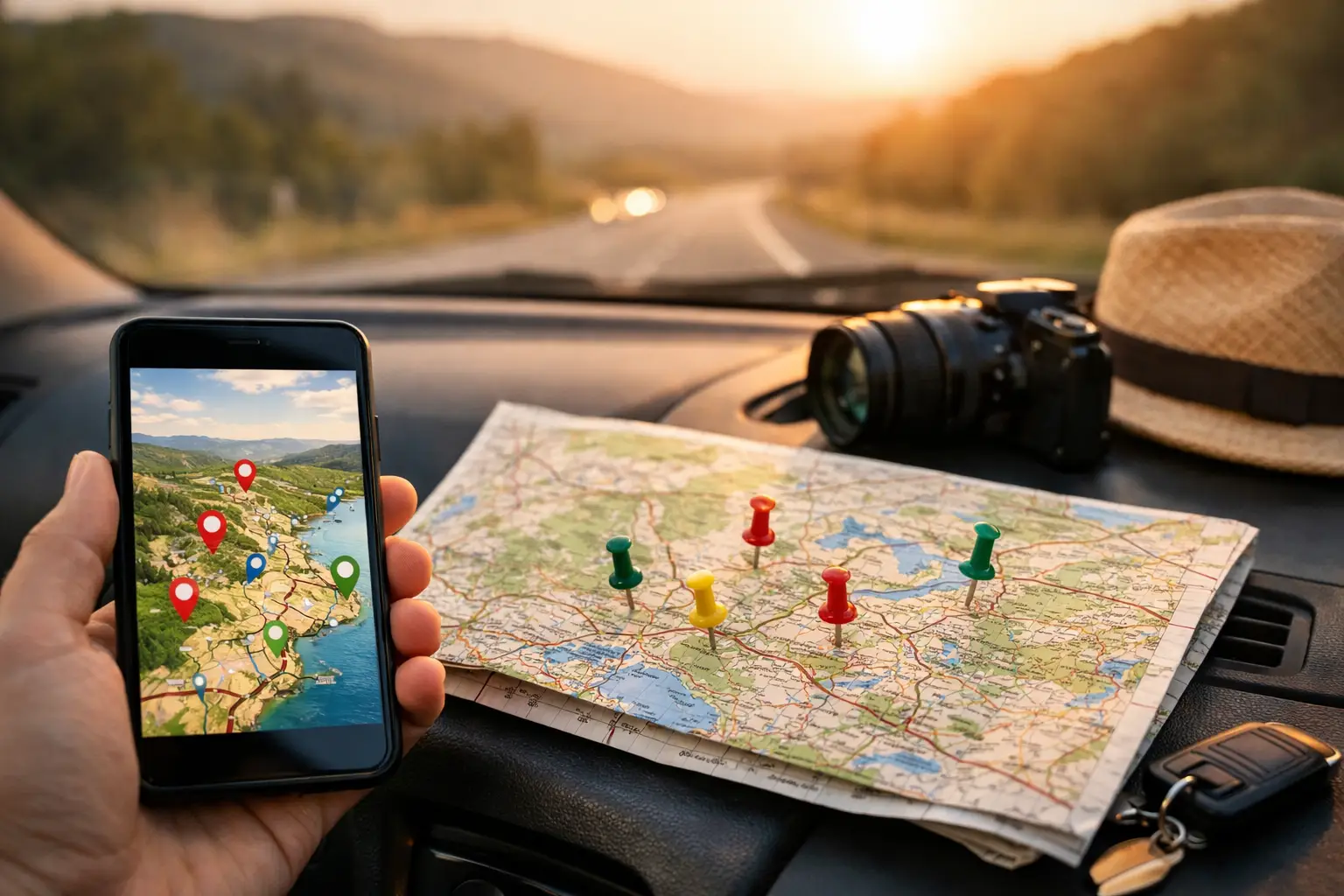
A saved place in a basic map app tells you where something is. It does not tell you why it mattered, who recommended it, whether your group agreed on it, how it fits the route, or what it cost to get there. That gap is exactly why a travel pins map app has become essential for road trippers, RV travelers, overlanders, and anyone trying to keep a real trip organized instead of just collecting dots on a screen.
For serious travel, pins are not just markers. They are decisions, memories, logistics, and future plans. If your app cannot connect those pieces, you end up back in the usual mess - screenshots, notes, chat threads, budget apps, booking emails, and a separate map tool that only handles directions.
What a travel pins map app should actually do
The best version of this tool should help you move from inspiration to execution without switching platforms every few minutes. A pin should do more than mark a coffee shop, campsite, fuel stop, or scenic lookout. It should carry context.
That means being able to save places you want to visit, organize them by trip, and understand how they fit into the route you are building. For group travel, it also means seeing who added the pin, discussing whether it is worth the detour, and keeping everybody on the same page.
For longer road trips, the need gets even more practical. You are not just pinning attractions. You are tracking overnight stops, border crossings, dump points, fuel stations, grocery runs, repair shops, and backup options if weather changes the plan. A basic map can hold some of that, but it rarely handles the full travel workflow well.
Why basic map pins stop being enough
A standard map app works fine when the trip is simple. If you are heading across town and saving two or three places, that is enough. But once a trip spans multiple days, vehicles, travelers, and moving parts, the cracks show up fast.
The first problem is fragmentation. Your route lives in one place, saved pins in another, expenses somewhere else, and trip conversations in a group chat that nobody can search properly when it matters. The second problem is context loss. Six months later, you may still see the pin, but not remember whether it was a campsite you loved, a place you skipped, or a mechanic who saved your trip.
Then there is the issue of collaboration. Many travelers are not planning alone. Couples, families, convoys, friend groups, and full-time travelers all need shared visibility. If one person controls the map while everyone else sends links and screenshots, planning slows down and details get missed.
The best travel pins map app for road-based travel
For road travel, the best app is not necessarily the one with the prettiest pins. It is the one that turns saved locations into usable trip infrastructure.
A strong travel pins map app should let you build trips around those locations rather than treating pins like static bookmarks. If you save a remote campsite, the app should help you understand where it sits in relation to the route, nearby services, and the rest of your itinerary. If you save a friend's recommendation for a small-town diner, that pin should stay attached to the trip where it matters, not disappear into a giant unsorted list.
This is where a road-focused platform stands apart from generic tourism tools. Travelers on long routes need map planning, but they also need budget control, booking records, traveler coordination, and vehicle oversight. Those needs are connected. When an app separates them, the user does the admin work instead.
Trip Tracka is built around that reality. Instead of giving you a map with pins and leaving the rest to chance, it brings route planning, shared trip organization, community pin discovery, travel chat, expense tracking, booking management, and vehicle records into one operating system for travel. No spreadsheets. No half a dozen apps.
Pins matter more when the route keeps changing
Road trips rarely go exactly as planned. Weather moves in. A campsite closes. Somebody in the group wants a shorter driving day. The vehicle needs attention. You find a better stop from another traveler and decide to reroute.
In those moments, pins stop being decorative and become operational. You need to quickly see alternatives, compare stop options, and make route decisions without digging through old messages or separate saved lists. The right app helps you adapt fast because your places, trip structure, and logistics already live together.
This matters even more for RV travelers, grey nomads, and overlanders. Their stops are shaped by fuel range, vehicle height, road access, camp services, maintenance timing, and overnight practicality. A scenic pin is great, but if it is three hours off route with no suitable stop before dark, the decision changes. Good travel planning tools respect that trade-off.
A travel pins map app should help you plan together
Shared travel is where weak apps really show their limits. If your travel group is bouncing between chat apps, notes, and map links, the trip starts feeling harder than it should.
A useful system lets everyone contribute without creating chaos. One traveler can drop in must-see stops, another can flag practical overnight locations, and someone else can keep an eye on cost-heavy segments of the route. Instead of loose ideas floating around, the group is working from one trip view.
That is especially useful for friend groups, couples planning extended travel, and caravan or convoy trips. Collaboration is not just about convenience. It reduces mistakes. Fewer duplicate bookings, fewer missed turns in the plan, fewer arguments over who thought the fuel stop was already handled.
Pins are better when they connect to budget and bookings
This is where many apps fall short. They help you save a place, but not manage what that place means financially or logistically.
A campsite pin might need a booking deposit. A national park stop could involve fees. A scenic detour may add fuel cost and time. When those details are disconnected from the map, budget control gets fuzzy fast. That is manageable on a weekend break. On a month-long road trip, it becomes expensive.
The stronger approach is to treat a pin as part of a real travel record. That means tying stops to expenses, keeping booking details close to the trip plan, and making it easier to understand how route choices affect the total cost. Travelers who live on the road or take frequent long trips know this is not overkill. It is how you stay in control.
Vehicle context changes what makes a good pin
Not every traveler thinks about places the same way. A backpacker might save hostels and food spots. An RV traveler may care more about dump points, larger parking access, and repair services. An overlander may prioritize remote camps, fuel intervals, and recovery options.
That is why the best travel pins map app depends on your travel style. If you are flying into cities for short stays, almost any mainstream map tool can cover the basics. If you are driving long distances, managing gear, tracking vehicle costs, or planning around maintenance windows, you need more structure.
Vehicle-aware travel is different. The route is not just about distance. It is about capability, reliability, timing, and cost. The app you use should respect that instead of pretending every trip works like a weekend city break.
Community pins are useful, but only with good organization
Traveler recommendations are valuable because they add local insight and real-world experience. You can find better stops, more practical overnight options, and places that never show up in generic travel roundups.
But community discovery only works if the app helps you organize what you find. Otherwise, you end up collecting random pins with no clear use. A good system lets you sort recommendations into actual trips, compare them against your route, and keep the best ones attached to the moments where they matter.
That balance matters. Too little discovery and your planning feels narrow. Too much unstructured discovery and your map becomes clutter.
Choosing the right app comes down to trip complexity
If all you want is a visual record of places you have visited, a simple pin map may do the job. If you want to plan routes, coordinate with others, track spending, manage bookings, and keep your vehicle and trip records in one place, you need more than a map.
That is the real test. Not whether an app can drop a pin, but whether it can support the whole journey around that pin.
For road-based travelers, that difference is huge. The best tool keeps planning practical, travel flexible, and records worth returning to later. When your pins carry route logic, shared input, trip costs, and real context, they stop being little map icons and start becoming the framework for better travel.
Choose the app that helps you move, decide, and remember with less friction. The right pin is not just where you went. It is how you kept the trip together.